
Syracuse and Ortigia: jewels of the Mediterranean between history and sea
Syracuse, the City of Archimedes, Baroque Art and Sunsets over the Sea
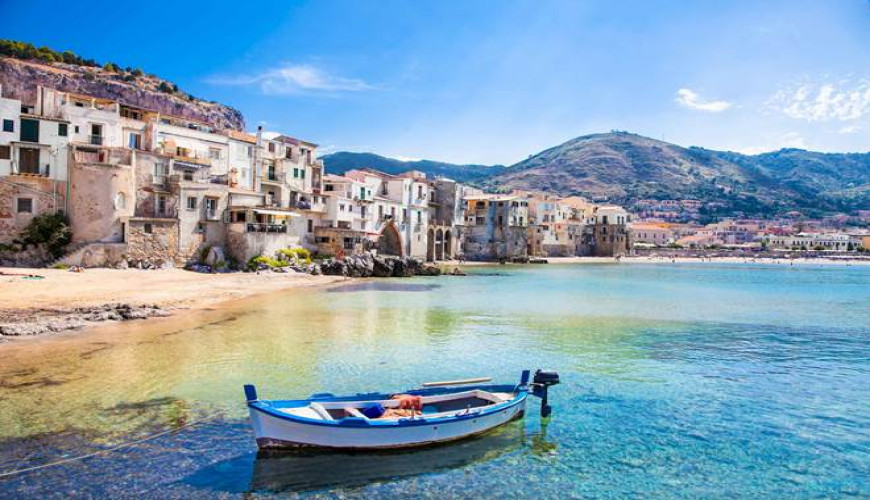
A Journey Through Ortigia, the Greek Theatre and the Wonders of Eastern Sicily
Syracuse: a city where history and the sea have blended for millennia
Syracuse is one of the most fascinating and historically rich cities in the Mediterranean. Founded by the Greeks in 734 BC, it became within a few centuries one of the most powerful poleis of the ancient world, rivaling Athens and leaving a cultural legacy that still enchants visitors today. Among temples, theatres, fortresses, and sea-facing alleys, Syracuse is a journey through different eras, united in a harmonious and evocative landscape.
Syracuse: history and essential information
1. Ancient origins
Syracuse was founded by Corinthian Greek colonists in 734 BC, in the area of the island of Ortigia.
Thanks to its strategic seaside location and the fertility of the land, it became within a few centuries one of the most powerful poleis in the Mediterranean.
Features of the Greek period:
the great Greek Theatre was built, one of the most imposing in the ancient world;
Syracuse expanded to surpass Athens in population and influence;
it produced philosophers, mathematicians, and scientists such as Archimedes, its most famous citizen.
2. Classical period and conflicts with Athens and Carthage
In the 5th century BC, Syracuse was involved in extremely harsh battles:
it defeated Athens in the famous Sicilian Expedition (415–413 BC);
it repeatedly repelled attempts at Carthaginian conquest.
Under the tyrant Dionysius the Elder (405–367 BC), the city reached its greatest splendor and politically dominated all of eastern Sicily.
3. Roman Syracuse
In 212 BC, after a long siege, Syracuse fell into Roman hands.
During this siege Archimedes died.
Under Rome:
it became the capital of the province of Sicily;
major architectural works developed, such as the Roman Amphitheatre;
a thriving Christian community emerged, testified by the catacombs.
4. The Middle Ages: Byzantines, Arabs, and Normans
After the fall of the Roman Empire, Syracuse passed through different dominations:
Byzantine: for some decades it became the capital of the Eastern Empire in the West (6th–7th century).
Arab (9th–11th century): it strengthened the economy, trade, and agriculture; the center of power shifted to Palermo.
Norman: restoration of buildings and urban renewal, with cultural integration between the Latin and Arab worlds.
5. The modern era and the 1693 earthquake
In 1693, a devastating earthquake struck all of southeastern Sicily.
Syracuse was rebuilt in Baroque style, creating:
uniform and theatrical churches,
new noble palaces,
harmonious squares.
Many of these buildings today are part of the UNESCO World Heritage.
6. Syracuse today
Today Syracuse is:
a city of about 120,000 inhabitants;
an international tourist destination, thanks to its mix of archaeology, sea, and Baroque architecture;
home to one of Italy’s most important archaeological parks: Neapolis.
It is divided into:
Ortigia (historic center and Baroque heart);
Neapolis (archaeological area);
modern and residential areas.
Ortigia: the ancient heart of the city
The historic center rises on the island of Ortigia, a maze of narrow streets, Baroque squares, and sea views. Here you will find:
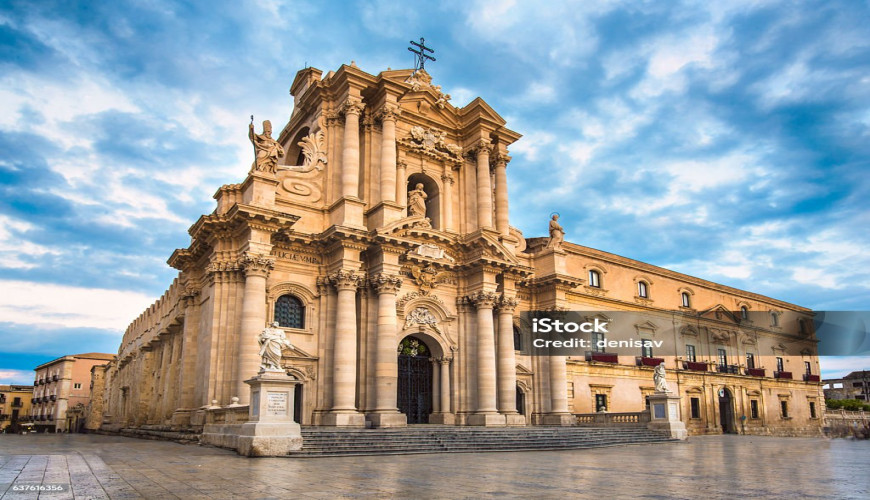
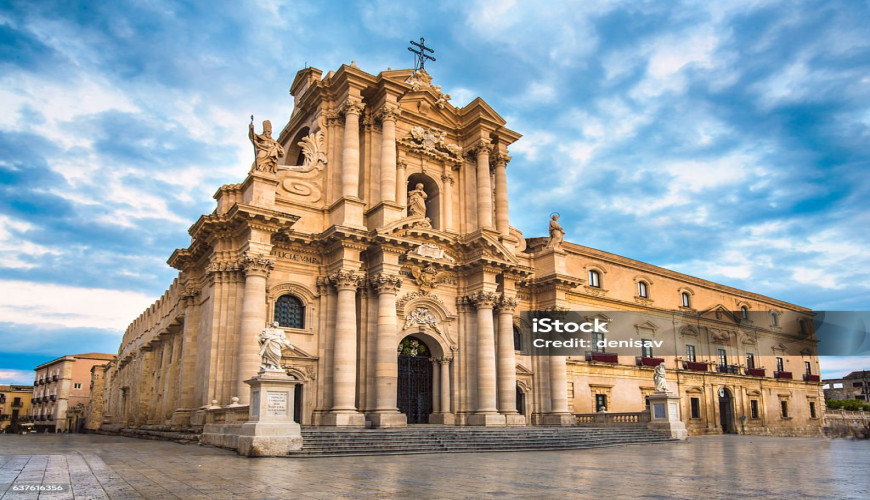
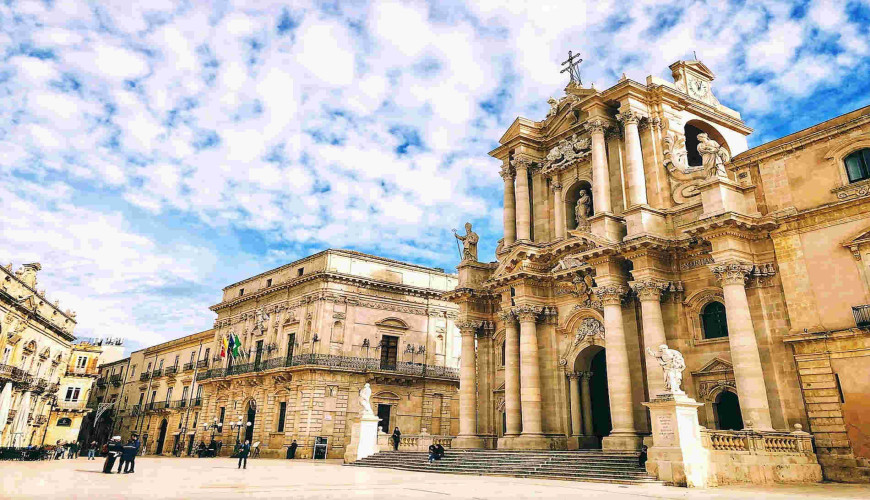
the Cathedral, built incorporating the columns of a Greek temple dedicated to Athena;
the Fonte Aretusa, a legendary place linked to the myth of Arethusa and Alpheus;
the Maniace Castle, a fortress overlooking the open sea;
restaurants, artisan shops, and 17th-century palaces that make Ortigia one of Italy’s most fascinating destinations.
Ortigia is the ideal place for sunset strolls, getting lost in the alleys, and discovering authentic Syracusan life.
What to see in Syracuse and Ortigia: unmissable wonders among history, sea, and Baroque
1. Ortigia (historic center)
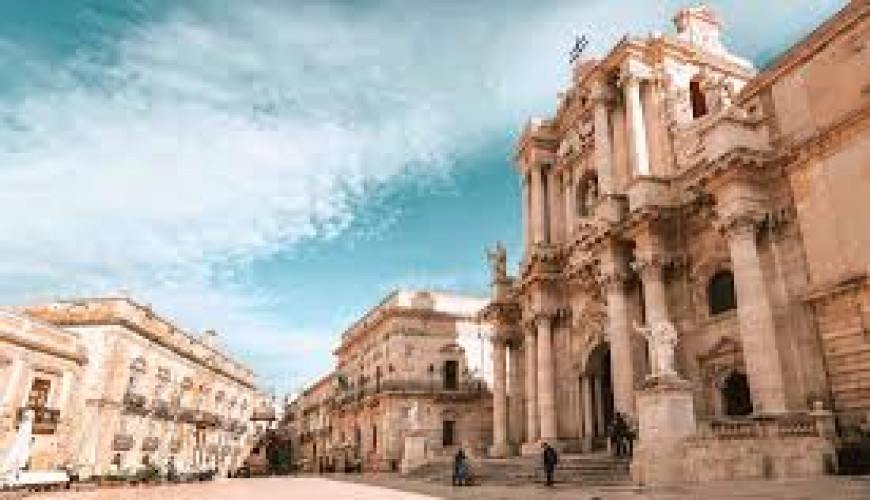
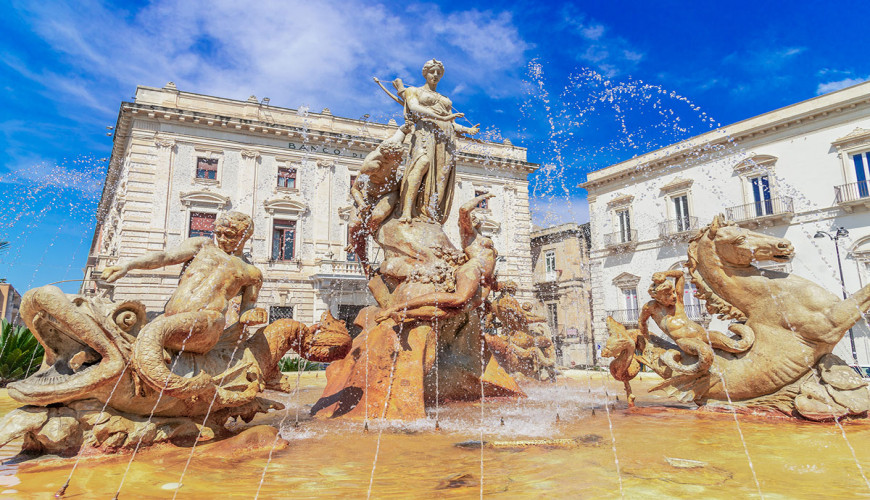
The beating heart of Syracuse, it is an island connected to the mainland by two bridges. Here lies the city’s oldest nucleus: narrow alleys, Baroque squares, artisan workshops, and seaside restaurants create a unique atmosphere. Ortigia is perfect for walking, savoring local life, and discovering the historic heritage in a spectacular setting.
2. Syracuse Cathedral (Temple of Athena)
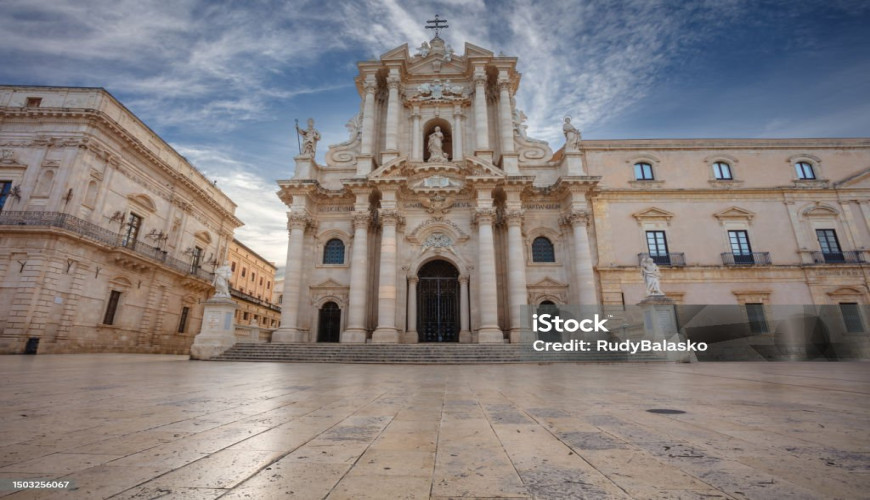
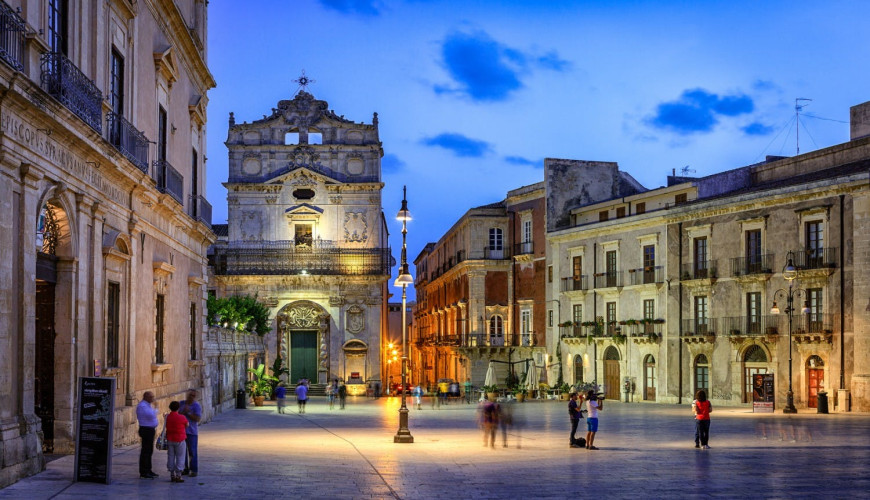
One of Italy’s most extraordinary cathedrals: built by incorporating a 5th-century BC Doric temple, whose original columns are still visible. The imposing, luminous Baroque façade dominates Piazza Duomo. The contrast between Greek and Baroque architecture makes this place unique.
3. Fonte Aretusa
A freshwater pool located along Ortigia’s seafront, linked to the myth of the nymph Arethusa and the god Alpheus. Papyrus grows here—one of the few places in Europe where this happens spontaneously. A charming corner, ideal for a romantic or photographic stop.
4. Maniace Castle
A fortress commissioned by Frederick II in the 13th century, located at the tip of Ortigia. It is a notable example of Swabian military architecture and offers spectacular views over the open sea. It often hosts exhibitions and cultural events.
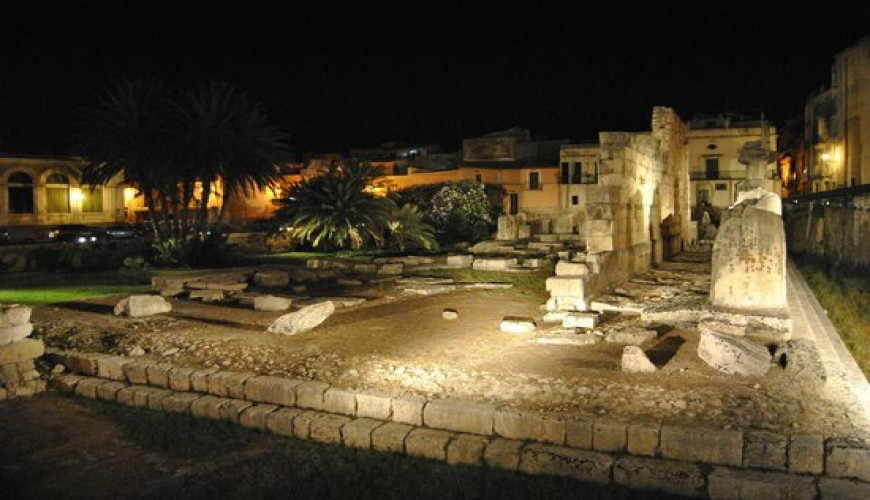
5. Temple of Apollo
Located at the entrance to Ortigia, it is the oldest Doric temple in Sicily (6th century BC). Despite its ruined state, its imposing columns evoke the greatness of the Greek past.
6. Ortigia Market
Lively and colorful, it is the perfect place to taste local products: spices, cheeses, olives, tuna, bottarga, cherry tomatoes, and oranges. It offers an authentic sensory experience and represents a fundamental chapter of Syracusan identity.
7. Neapolis Archaeological Park
The most important archaeological complex in eastern Sicily. It brings together monuments from different eras in a well-kept green area. The visit helps you understand the importance and power of Greek and Roman Syracuse.
8. Greek Theatre
A masterpiece of ancient theatre architecture, carved into the rock and among the largest in the Hellenic world. Even today it hosts classical performances during INDA productions, offering an unforgettable theatrical experience.
9. Ear of Dionysius
An artificial quarry with a distinctive shape and remarkable acoustics. Legend has it that the tyrant Dionysius used it to listen to prisoners. A fascinating stop between history, nature, and mythology.
10. Roman Amphitheatre
A majestic 3rd-century AD structure intended for gladiatorial combats. Part of the arena and the stands is still visible, showing the importance of Roman Syracuse.
11. Altar of Hieron II
A large public altar about 200 meters long, used for ceremonial sacrifices in the Hellenistic era. It testifies to the political and religious power of Syracusan rulers.
12. Sanctuary of Our Lady of Tears
An imposing modern building constructed to commemorate the miracle of the weeping of a sacred image in 1953. Its very high dome is visible from all over the city.
13. Catacombs of San Giovanni
One of the largest early-Christian complexes in Italy. Tunnels, tombs, and underground places of worship offer an evocative immersion into the earliest forms of Christianity.
14. Basilica of Santa Lucia al Sepolcro
Linked to the life and martyrdom of Syracuse’s patron saint, it houses valuable works and preserves an atmosphere of deep spirituality. It once also safeguarded Caravaggio’s famous painting.
15. Paolo Orsi Archaeological Museum
Among the most important archaeological museums in Europe. Rich in Greek, Roman, and prehistoric artifacts, it is essential for understanding the history of Syracuse and Sicily.
16. Latomie dei Cappuccini
Ancient stone quarries transformed into a natural and evocative place. A route among high walls, vegetation, and absolute peace. Less crowded, they offer a more intimate experience.
17. Plemmirio Marine Protected Area
A high-value natural area, ideal for diving, snorkeling, and coastal trekking. The waters are among the clearest in Sicily, with seabeds rich in marine life.
18. Arenella and Fontane Bianche beaches
Among the most loved seaside destinations near Syracuse. Arenella offers beach clubs and calm waters; Fontane Bianche stands out for white-sand beaches and turquoise sea—almost Caribbean.
19. Puppet Theatre
A Sicilian tradition recognized by UNESCO as Intangible Cultural Heritage. The shows tell chivalric stories with finely crafted marionettes: a unique cultural experience.
20. Caravaggio in Syracuse – Basilica of Santa Lucia alla Badia
Here you can admire the Burial of Saint Lucy, one of the masterpieces Caravaggio painted during his stay in Sicily. A work of great emotional and spiritual intensity.
What to eat in Syracuse: a journey through the flavors of eastern Sicily
Syracusan cuisine is a mosaic of sea, citrus fruits, Greco-Roman traditions, and Arab influences—a gastronomic heritage that tells millennia of history. Walking through Ortigia, the historic market, and the sea-facing districts, you discover a table rich in Mediterranean aromas, simple yet precious ingredients, intense flavors, and recipes passed down from generation to generation. Eating in Syracuse means experiencing the city through taste.
The tradition of first courses
Syracusan first courses are an explosion of local identity.
Pasta alla Siracusana, prepared with fresh tomato, black olives, onion, and toasted breadcrumbs, represents humble cooking that is deeply authentic.
Pasta con le sarde, with wild fennel, pine nuts, raisins, and saffron, combines savoriness and sweet notes in a typically Mediterranean balance.
For seafood lovers, spaghetti with sea urchins offers a raw, pure, enveloping flavor—among the most emblematic dishes of the Syracusan coast.
Fish: the heart of Syracusan cuisine
Seafaring tradition dominates the table. Fishmongers and restaurants offer daily dishes that express the freshness of the local catch.
Tuna alla ghiotta, with tomato sauce, onions, capers, and olives, is an ancient dish tied to the old tuna fisheries.
Grilled swordfish, served with salmoriglio and Syracuse IGP lemon, is an unmissable must.
Syracusan-style octopus, boiled and dressed with citrus and parsley, is one of the city’s most distinctive flavors.
Street food and baked specialties
Syracuse is rich in traditional street food.
Syracusan arancini come in classic flavors and creative variations such as swordfish, eggplant, or pistachio.
Scaccia or 'mpanata, a stuffed flatbread with vegetables, tuma and anchovies, or sausage, is a homemade dish linked to holidays and special occasions.
Syracusan focaccia, thin and scented with onion, oregano, and tomato, is perfect as a quick snack or to enjoy at the market.
Products of the land
The territory provides an extraordinary variety of ingredients.
Pachino IGP cherry tomatoes are very sweet and juicy, ideal for salads, bruschetta, and first courses.
Citrus fruits—especially Syracuse IGP lemons—are key not only in drinks, but also in salads, desserts, and main courses.
Desserts, granita, and gelato
Syracusan pastry-making is a chapter of its own.
The Sicilian cannolo, filled with fresh ricotta and decorated with pistachio or chocolate, is a must.
Crispelle di riso with honey, typical of the Feast of Saint Joseph, combine crunch and sweetness in a triumph of tradition.
Almond pastries, made with Avola almonds, are true gems of confectionery.
In summer, you must try granita with Syracuse IGP lemon or black mulberries, always served with brioche col tuppo.
Gelato with almond, pistachio, and carob represents some of the best flavors of eastern Sicily.
A cuisine that tells the story of the territory
Eating in Syracuse means discovering a perfect balance between sea and land, sweetness and savoriness, tradition and creativity.
It is a gastronomy that does not show off, but wins you over with its authenticity: in Ortigia’s restaurants, in historic taverns, at the market stalls, and in pastry shops scented with cinnamon and citrus.
What to eat in Syracuse: the 20 must-try excellences
1. Pasta alla Siracusana
A humble first course but extremely rich in Mediterranean flavors. It features fresh tomato, onion, local black olives, Pantelleria capers, and toasted breadcrumbs—once used as an alternative to grated cheese. It is the perfect synthesis of simple, genuine cooking from southeastern Sicily.
2. Pasta con le sarde
In Syracuse this recipe has a more delicate profile than the Palermo variant. Very fresh sardines are combined with wild fennel, pine nuts, raisins, and saffron. The result is an extraordinary balance of savoriness, herbal aromas, and sweet notes.
3. Spaghetti with sea urchins
An iconic dish of the Syracusan coast: simple, raw in its essence, and incredibly powerful in flavor. The sea urchin roe is added at the end of cooking, preserving its creaminess. Traditionally served in winter and spring, when sea urchins are at their most flavorful.
4. Tuna alla ghiotta
An ancient recipe linked to the area’s tuna fisheries. Fresh tuna is cooked in a thick, aromatic sauce with onions, tomato, olives, and capers. It was once the dish of fishermen’s families and still represents a great classic of maritime tradition.
5. Syracusan-style octopus
Slow-cooked to make it very tender, it is served with Syracuse IGP lemon, parsley, and black pepper. You will find it in restaurants, markets, and even at the harbor stalls. A pure flavor that expresses the essence of the sea.
6. Seafood salad with citrus
A specialty that combines maritime tradition with local agricultural products. Cuttlefish, squid, shrimp, and octopus meet Syracusan oranges and lemons. A burst of freshness that reflects the Mediterranean soul of this city.
7. Syracusan arancini
Beyond the classic “ragù” and “butter” fillings, Syracuse offers distinctive flavors: swordfish, eggplant, ricotta, shrimp, or pistachio. The coating is crunchy and the frying very golden, in line with eastern Sicilian tradition.
8. Scaccia siracusana (or 'mpanata)
An ancient peasant recipe, often prepared during holidays. It is a stuffed flatbread that can contain vegetables, tuma and anchovies, broccoli, sausage, or even swordfish. Every family has its own version passed down for generations.
9. Syracusan focaccia
Thin, slightly crunchy, and topped with plenty of onion, tomato, oregano, and sometimes black olives. A beloved baked specialty, eaten as a snack, quick lunch, or street food.
10. Pachino IGP cherry tomatoes
Famous worldwide, they are a symbol product of the area. Very sweet and juicy with a thin skin, they are used in countless preparations: salads, bruschetta, first courses, and as an accompaniment to fish.
11. Grilled swordfish
Caught in the waters between Syracuse and Avola, it is served with the traditional “salmoriglio”: extra-virgin olive oil, Syracuse lemon, oregano, and garlic. It is one of the most requested dishes during the summer season.
12. Syracusan caponata
Different from the Palermo version: softer, sweeter, and less acidic. Made with fried eggplant, celery, onion, olives, and capers. It often accompanies fish dishes or white meats.
13. Sarde a beccafico
An elegant dish from popular tradition: sardines rolled and stuffed with breadcrumbs, pine nuts, raisins, orange zest, and a drizzle of honey. They originated as “poor” food, inspired by the beccafico birds that only nobles could afford.
14. Crispelle di riso with honey
A typical dessert for the Feast of Saint Joseph. These are rice sticks scented with cinnamon, fried and dipped in warm honey. Soft inside, crunchy outside—an ancient delight.
15. Sicilian cannolo
In Syracuse the ricotta is particularly fresh and less sweet than in other areas. The shell, thin and crunchy, is filled at the moment to preserve aroma and texture. Toppings include pistachio, chocolate shavings, or candied fruit.
16. Syracuse IGP lemon granita
One of the city’s symbols. Local lemons, considered among the best in the world, create a fragrant, fresh, natural granita. Perfect for breakfast, especially in summer.
17. Black mulberry granita
One of the most iconic granitas in all of Sicily. Dark, velvety, and intensely fruity, it is always paired with brioche col tuppo—a ritual that is part of local identity.
18. Brioche col tuppo
Soft, fragrant, and slightly buttery, it is the essential companion to granitas and gelato. The “tuppo” recalls an old Sicilian women’s hairstyle.
19. Pistachio, almond, and carob gelato
The Avola and Noto area produces some of Italy’s best almonds; Bronte is nearby; and carob is a symbolic fruit of the Val di Noto. Syracusan gelato is creamy, intense, and natural.
20. Almond desserts (pastries, sospiri, nucatoli)
A hallmark of Syracusan pastry-making. Local almond pastries are among the best on the island: soft, fragrant, and rich in pure almond. Often flavored with lemon, orange, or pistachio.
Why choose TDS Transfer and TDS Rent to visit Syracuse
Visiting Syracuse means immersing yourself in millennia of history, between the charm of Ortigia, the grandeur of the Neapolis Archaeological Park, and the beauty of the crystal-clear sea. To enjoy all this without stress, with comfort and full freedom of movement, choosing TDS Transfer and TDS Rent is the ideal solution.
1. Comfort and peace of mind from the moment you arrive
With TDS Transfer you reach Syracuse directly from the airports of Catania or Comiso—no waiting, no managing luggage on public transport, and no uncertainty about schedules.
Professional drivers, comfortable vehicles, and punctual service allow you to start your trip in the best possible way.
2. Flexible mobility to explore Syracuse and its surroundings
Syracuse is not only Ortigia: just a few kilometers away you will find wonderful beaches such as Arenella and Fontane Bianche, the Plemmirio Marine Protected Area, and art towns such as Noto, Marzamemi, or Palazzolo Acreide.
With TDS Rent, you can travel independently and organize your itinerary on your own schedule, renting modern, clean cars suited to every need.
3. No stress related to traffic or parking
Syracuse, especially in high season, can be challenging to manage by car in Ortigia’s ZTL (limited traffic zone).
By relying on TDS Transfer, you avoid traffic, difficult parking, and restricted areas, arriving at your destination without worries.
With TDS Rent, thanks to the team’s advice, you can plan routes, parking, and timing in an optimized way.
4. Tailor-made services
Every trip is different: TDS offers customized solutions for couples, families, small groups, or business travelers.
Private transfers, car rental, personalized itineraries, day tours to Etna, Noto, or Taormina: everything can be adapted to your needs.
5. Safety and reliability
Choosing a professional operator means traveling in total safety.
The TDS vehicles are modern and regularly maintained, drivers are qualified, and customer service is always available for assistance or last-minute changes.
6. A local partner who knows the territory
TDS is not just a transport service: it is a point of reference for those who want to discover Syracuse in an authentic way.
The team knows areas, schedules, lesser-known destinations, recommended restaurants, and useful information that enhance the travel experience.
7. Smoother travel, richer experiences
Thanks to the Transfer + Rent combination, you can:
- arrive without stress,
- visit Syracuse comfortably,
- explore all of eastern Sicily with complete freedom.
In summary
Visiting Syracuse with TDS Transfer and TDS Rent means enjoying one of Sicily’s most beautiful cities without worries, with reliable services, comfortable vehicles, and the freedom to discover the area at your own pace.
If you want to rent a car at Palermo, Catania, Trapani-Birgi Airport, or anywhere else in Sicily, click this link https://www.tdsrent.it
If you want to book a transfer from one of the main airports or from anywhere in Sicily where you are located, click here https://www.tdstransfer.it