
Custonaci, a village treasure – Custonaci... Welcome to a unique journey through nature, art, history, devotion and food and wine traditions.
Custonaci 2026, a treasure village and so much more
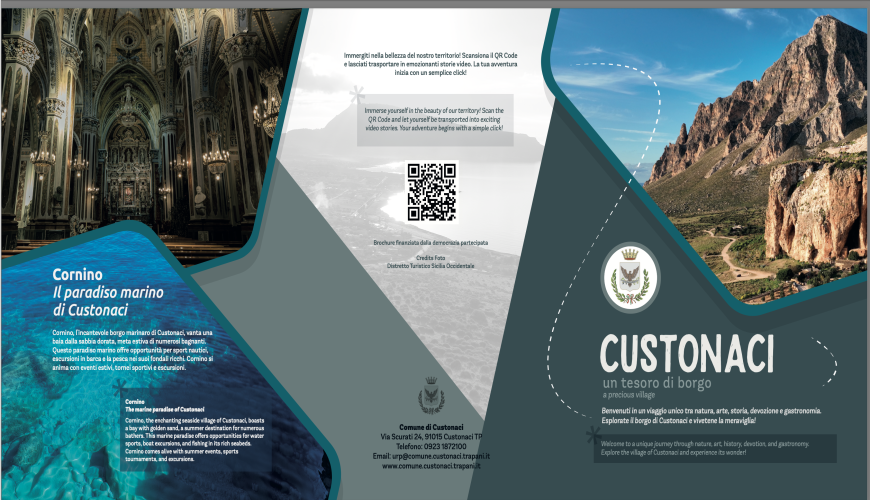
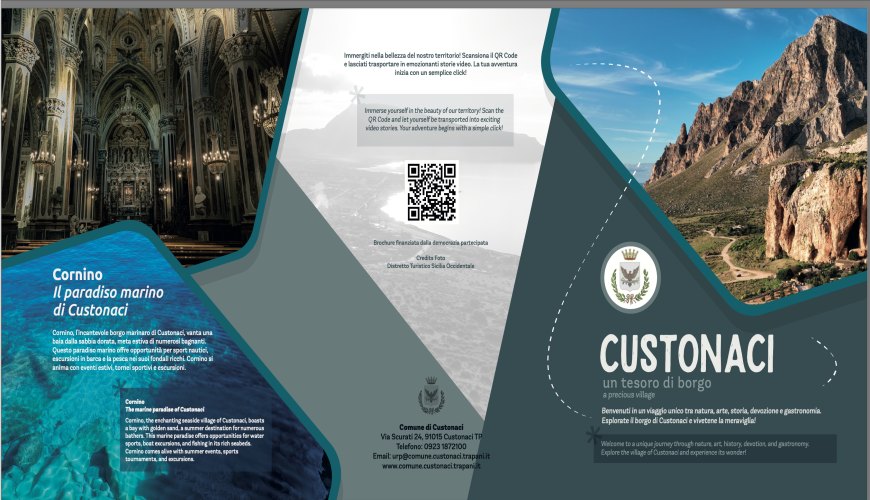

Custonaci… Welcome to a unique journey, the Magical City
CUSTONACI — A TREASURED VILLAGE
Custonaci… Welcome to a unique journey through nature, art, history, devotion, and gastronomy.
Explore the village of Custonaci and experience its wonders, including Cornino — the seaside paradise of Custonaci.
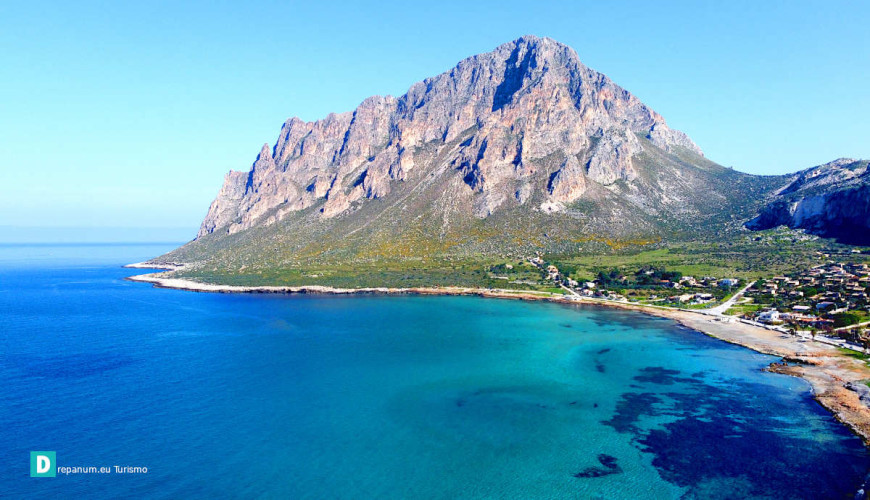
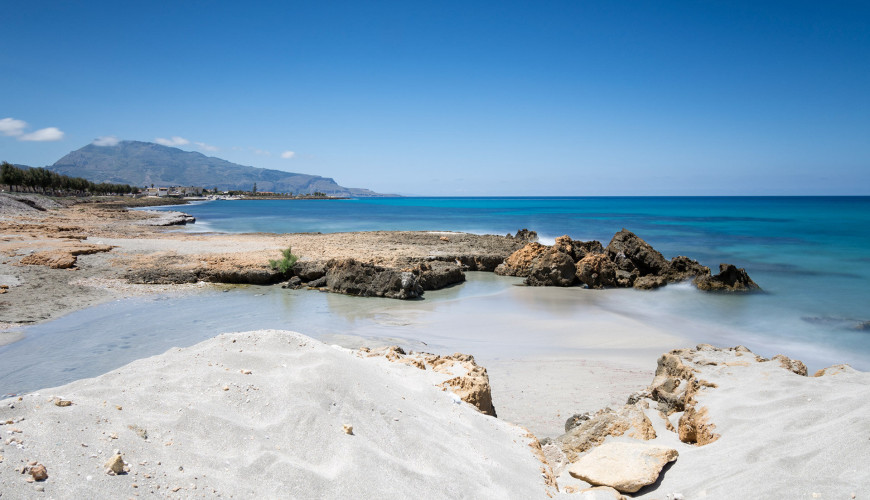
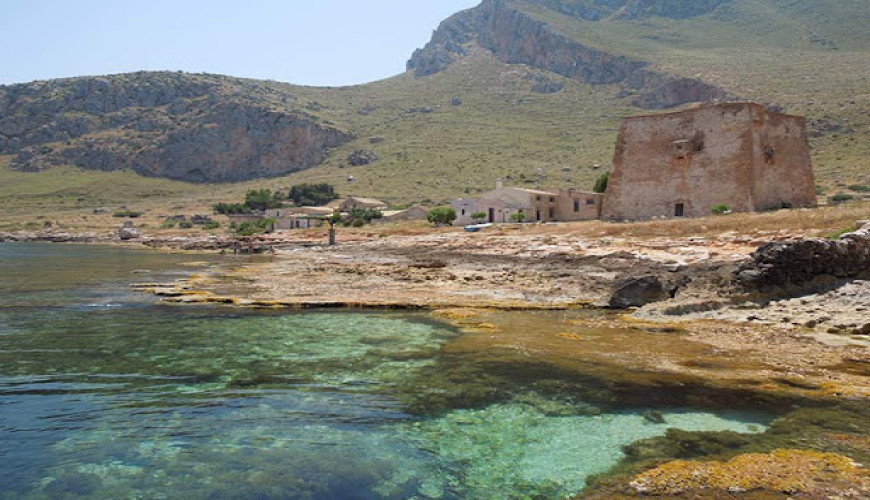
Cornino, the enchanting fishing village of Custonaci, boasts a golden sandy bay, a beloved summer destination for countless visitors.
This marine paradise offers opportunities for water sports, boat excursions, and fishing in its rich seabeds.
In summer, Cornino comes alive with sports events, tournaments, and excursions.
Discover Custonaci: timeless elegance.
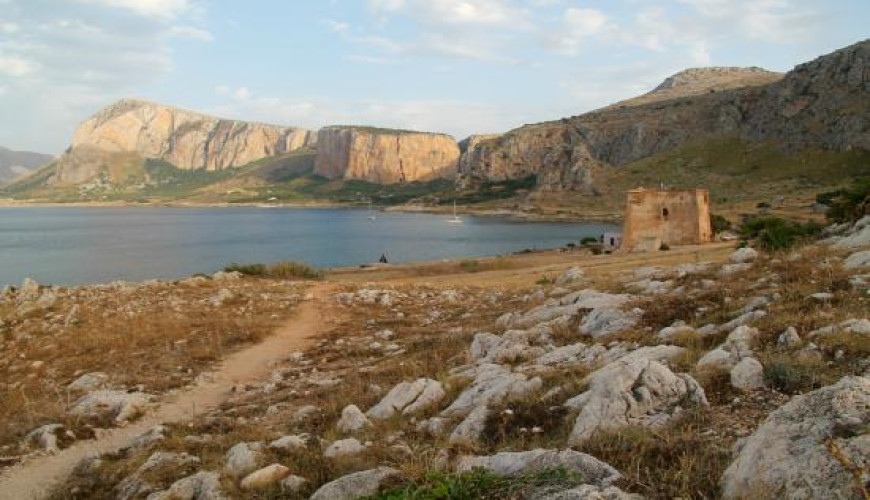
Custonaci, in Sicily, welcomes you with ageless landscapes: the mighty Mount Erice to the south and the striking Mount Cofano to the north dominate the bay of Cornino.
Our sanctuary and marble quarries rise with grandeur.
The sunset paints the scenery with magical colors, where rocks, vegetation, olive trees, and vineyards blend into an unforgettable canvas.
History, Nature, and Archaeology Intertwined — Live the Essence of Custonaci
Shaped by Elymian roots, Phoenician influences, and an Arab touch, the town tells its ancient story.
Nature paints breathtaking landscapes with the Monte Cofano Nature Reserve and Mount Sparagio.
The Monte Cofano Reserve is a true treasure chest, one of the most fascinating natural attractions in the region. Surrounded by silence and embraced by lush flora, it is characterized by massive rocks stretching all the way to the sea.
In the countryside, you’ll find the bagli, ancient fortified rural structures with internal courtyards.
Custonaci boasts a rich historical and cultural heritage, from prehistoric caves to steles carved with anthropomorphic figures.
Its many prehistoric caves reveal millennia-old secrets.
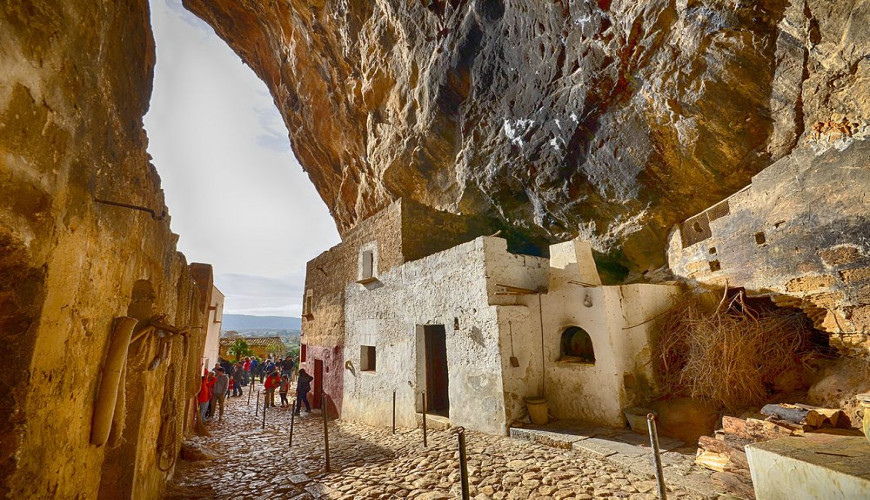
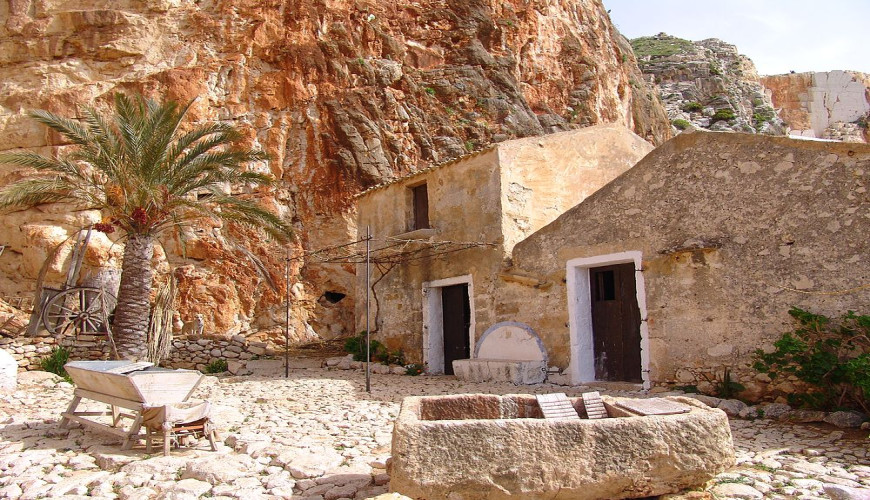
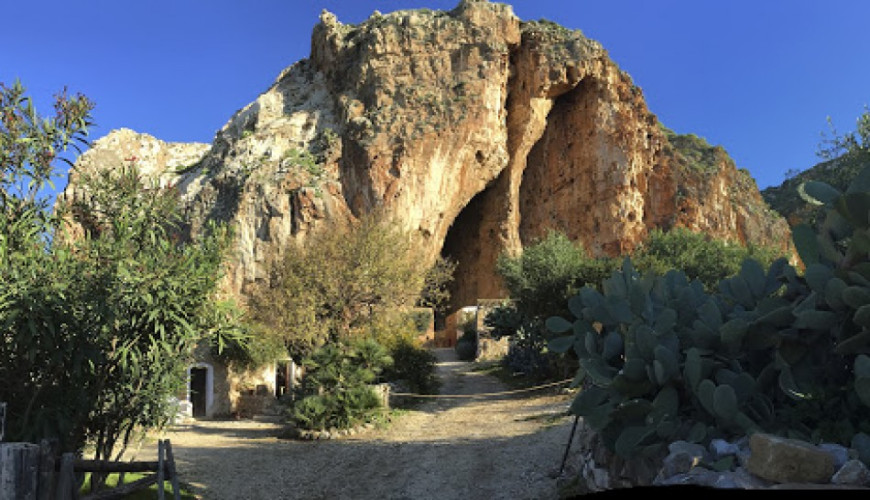
Among them, the most famous is Grotta Mangiapane, which once housed a family who, in the early 1800s, transformed the space into a small village. Today it becomes the stage for living traditions, hosting the museum and the renowned Living Nativity.
Custonaci is also home to archaeological mysteries, including the oldest Islamic granary — a site of immense historical value.
Two imposing monoliths, aligned with the sun, mark the passage of time: the Gate of the Sun and the Horse of the Sun.
Custonaci is a sort of Sicilian Stonehenge, still waiting to be fully appreciated.
Art and Monuments — Custonaci, a Land of Marian Devotion
In the heart of the village, art comes to life through the Madonna of Custonaci, a delicate panel painting from 1521.
Framed by angels and ribbed vases filled with wheat, the enthroned Madonna with Child is the centerpiece of devotion.
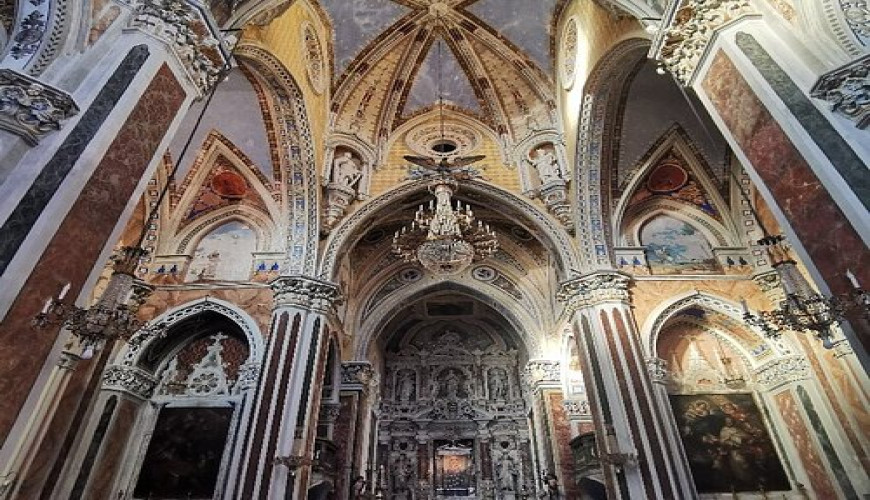
The apse of the Custonaci Sanctuary stands imposingly, featuring a Baroque marble tribune adorned with a Gagini-school marble Immaculate and four wooden statues by sculptor Pietro Cannamela.
Frescoes by Domenico La Bruna, canvases by Giuseppe Felici, and the painted decorations of Carlo Righetto enrich the sanctuary.
In Parco Cerriolo, a unique expression of faith unfolds through a marble-station Via Crucis.
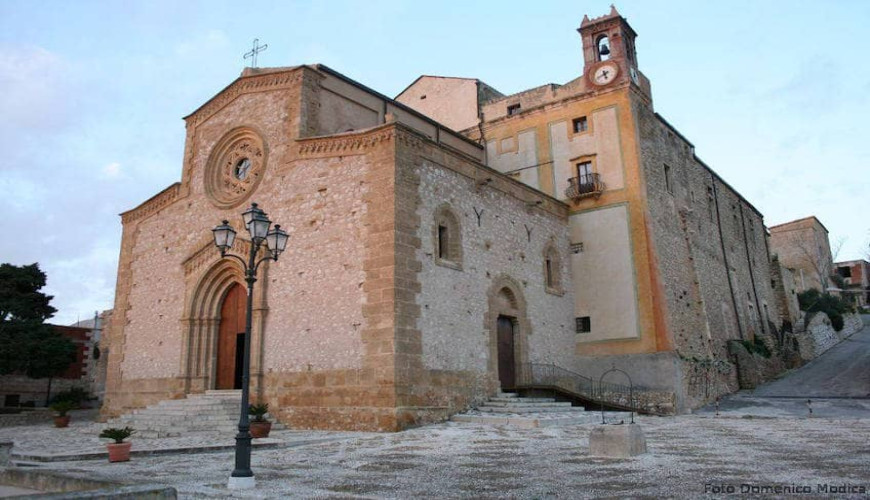
The Marian Sanctuary of Custonaci, dating back to the mid-1500s, is a symbol of ancient worship and pilgrimage, with a façade marked by ogival arches.
The “Art and Faith” Museum preserves a precious 15th-century wooden shrine with the Madonna of Custonaci, processional banners, sculptures, paintings, and more.
The wooden case used during the famous transports of the Madonna’s painting to Erice is a distinctive element of this tradition.
The eternal connection between Custonaci and the Madonna is celebrated every year with the evocative “Landing” Ceremony.
Tradition recounts that the Madonna arrived from the sea on a Venetian or French ship that survived a shipwreck, landing at Cala Bukutu.
During the August festivities, a sailing ship enters the bay illuminated by fireworks, bringing ashore a copy of the sacred image. Faithful with torches accompany it in procession to the Sanctuary, reenacting this ancient event with devotion.
The presence of the Madonna of Custonaci permeates the territory, from the “Regina Pacis” statue in Parco Cerriolo to the “Stella Maris,” positioned 13 meters deep in the waters of the Monte Cofano Nature Reserve.
Custonaci is a Civitas Mariae, a place imbued with centuries-old Marian devotion.
Tradition and Flavors — Taste the Authenticity of Custonaci
Local cuisine shines with couscous prepared with seabass, sea bream, tuna, and red shrimp served in delectable roasts, flavorful stews, and perfect fries.
Among the specialties, pane cunzato and fine local meats are true gastronomic jewels that express the passion of this land.
Country cooking impresses with ricotta-filled dumplings served in broth, and roasted kid and lamb perfumed with bay leaves and rosemary.
Desserts such as spince, ricotta-filled cassatelle, and pignolata delight the palate.
A culinary journey between sea and countryside, paired with fine olive oil and excellent local wine.
Economy and Traditional Production — The Beating Heart of Custonaci
The prized marbles of Custonaci hold major geological and economic importance. Used for centuries to embellish monumental works such as the Royal Palace of Caserta and St. Peter’s Basilica in Rome, they have gained worldwide fame.
The Museum of Marble and Caves displays photographs and tools used in the Custonaci marble quarries during the 1950s.
Agriculture and livestock farming, along with the tourism sector — hotels, B&Bs, hospitality services, and travel services — give strength and vitality to Custonaci’s economy.
THE 10 THINGS TDS RECOMMENDS YOU MUST SEE IN CUSTONACI
1 – Santuario Maria Santissima di Custonaci e Museo Arte e fede
The spiritual heart of the town and one of the most important sanctuaries in western Sicily
The Sanctuary of Maria SS. of Custonaci is the symbol of the town and one of the most venerated Marian sites in the province of Trapani. It faces Custonaci’s main square and is surrounded by the municipal villa, from which the basilica presents itself in all its grandeur.
History and devotion
Ancient origins
According to tradition, a ship bound for the East was caught in a storm in the Mediterranean and the sailors prayed to the Madonna depicted on an icon they carried on board. The sea calmed, and the grateful sailors donated the image to the first community they reached: Custonaci. From this event stems the deep devotion of the people of Custonaci.
The Marian cult
The icon is regarded as miraculous and has protected, for centuries:
- local farmers
- fishermen
- families of Custonaci
It is called the “Madonna dei Massari” (Madonna of the Farmers), because she is considered protector of rural labor and the land.
Architecture of the Sanctuary
The church has undergone several transformations over the centuries.
Exterior
- dramatic façade with rose window
- monumental staircase
- side bell tower
- Gothic-Renaissance style
Interior
- wide, luminous nave
- imposing main altar
- side chapels
- Baroque decorations
- statues and sacred works from the 17th–18th centuries
The combination of Gothic, Renaissance and Baroque elements makes it one of the most elegant sanctuaries in western Sicily.
The Icon of the Madonna of Custonaci
At the heart of the Sanctuary is the ancient panel painting of the Madonna and Child, datable between the 15th and 16th centuries.
The Painting of the Madonna of Custonaci: history, devotion and identity of the Sicilian village
The painting housed in the Sanctuary is one of the most important religious and artistic symbols of western Sicily. It is a painted wooden panel depicting the Virgin with Child in the traditional Virgo Lactans iconography (the nursing Virgin), an image of strong human and spiritual resonance.
Origin and features of the painting
The work is an oil-painted wooden panel, probably produced between the late 15th and early 16th centuries. Many scholars associate it with the artistic circles linked to the school of Antonello da Messina, because of its refined style, soft colors and the delicacy of the faces.
The painting measures about 1.40 × 0.80 m, is made of three joined boards and reveals a richly decorated mantle brought back to light by modern restorations. In the upper part two angels crown the Virgin, emphasising her regal character and the deep devotional significance for the whole community.
The legend of the landing at Cornino
According to tradition, many centuries ago a ship from the open sea was surprised by a violent storm while sailing along the coast between Monte Cofano and the area where the village of Custonaci now stands. The crew, terrified, invoked the protection of the Madonna before a sacred painting they had on board.
The storm suddenly subsided and the sea became calm. The vessel was thus able to land safely on the coast, near the present-day bay of Cornino. To thank the Madonna for the miracle, the sailors decided to donate the painting to the local people. From that moment the sacred image became the object of profound veneration and was kept in the hilly area where the Sanctuary of Maria Santissima of Custonaci would later be built.
Meaning for Custonaci
The legend of the landing is much more than a tale: it symbolizes the town’s religious and cultural identity.
- It represents the Madonna’s protection of sailors and seafaring people.
- It explains the origin of local devotion and the cult surrounding the famous painting.
- It forms the basis of Custonaci’s patronal feast, celebrated every year with processions, pilgrimages and traditional events.
Devotion and tradition
The Madonna of Custonaci is venerated as the patroness of the Agro Ericino, and the painting was solemnly crowned in the 18th century with papal authorization. Each year, in the last week of August, the town celebrates one of Sicily’s most heartfelt Marian feasts, with processions, ancient traditions and strong popular participation.
For visitors to the area, a stop at the Sanctuary and before the painting is a precious moment to discover local history, faith and culture.
Feast of the Madonna of Custonaci: tradition, devotion and identity of western Sicily
The Feast of the Madonna of Custonaci is one of the most important religious and popular events in Sicily. Every year, during the last week of August, the village of Custonaci comes alive with celebrations, historical reenactments, processions and moments of great collective participation. For visitors to the province of Trapani, this feast is a unique opportunity to discover local culture, faith and traditions.
When the feast takes place
The feast takes place in the last week of August and unfolds over several days. The climax of events generally runs from Sunday through the concluding Wednesday, with religious celebrations, folkloric shows and eagerly awaited events for both devotees and tourists.
The most important moments of the feast
The Feast of the Madonna of Custonaci is rich in evocative events that combine the sacred and the popular.
- Sunday – Opening of the celebrations
Folk parades, Sicilian carriages, musical groups and solemn ceremonies officially open the week dedicated to the Madonna of Custonaci.
- Monday - The reenactment of the landing at Cornino
The most emotional moment of the festival. Tradition says the painting of the Madonna arrived by sea during a storm. This episode is reenacted in the bay of Cornino, where a boat symbolically brings the sacred image ashore, accompanied by singing, torches and fireworks. A unique and spectacular event that attracts visitors from across Sicily.
- Tuesday – Folklore and celebrations
A day dedicated to solemn vespers, parades of allegorical floats inspired by the life of the Virgin, and musical performances that animate the historic centre.
- Wednesday – The great procession
The procession of the Madonna of Custonaci winds through the streets of the village, accompanied by the faithful, confraternities and visitors. It is the most intense religious moment, symbolically concluding the festivities with wide popular participation. It is one of the most important religious events in the area.
Museum “Art and Faith” of the Sanctuary of Custonaci: history, tradition and devotion
The Museum “Art and Faith”, located inside the Marian Sanctuary of Custonaci, is one of the most significant sites of Sicilian religious tradition. Established in 2005 thanks to the commitment of the Festival Committee and the sanctuary’s parish priests, the museum preserves centuries of history, sacred art and testimonies of deep devotion to the Madonna of Custonaci.
Origins and historical value of the museum
The Sanctuary of Custonaci, whose roots date back to the 16th century, has long been the spiritual heart of the village. Inside it, the Museum “Art and Faith” collects works, documents and artefacts that recount the development of the Marian cult and the central role the Madonna of Custonaci has played in the local community.
What the Museum “Art and Faith” preserves
The exhibition itinerary is divided into several sections, each dedicated to an aspect of Custonaci’s religious tradition:
- Iconography of the Virgin: paintings, panels and historical representations of the Madonna of Custonaci, including an ancient 16th-century wooden bas-relief.
- Ex-votos and testimonies of popular devotion: objects donated by devotees as signs of gratitude for graces received.
- The Vara of the Madonna: the large wooden processional platform from 1831, richly decorated and used to transport the sacred painting during traditional processions to Erice.
Historical objects and sacred works: sculptures, processional banners, antique clocks and fragments of liturgical art linked to the life of the Sanctuary.
Each item kept in the museum tells of the deep bond between the community and the cult of the Madonna, showing how faith, art and tradition have become intertwined over the centuries.
The role of the museum in local culture
The Museum “Art and Faith” is more than an art exhibition: it is a place of identity where Custonaci’s religious heritage is preserved and enhanced. The presence of the Vara, sacred works and ex-votos represents a unique heritage that testifies to the history of an entire community.
A place to visit during a trip to Custonaci
The Sanctuary complex, together with the Museum “Art and Faith”, is today one of the main attractions for those visiting Custonaci. The museum offers visitors a fascinating journey through sacred art, popular traditions and the centuries-old Marian devotion that characterises the town.
Visiting the Museum “Art and Faith” means immersing yourself in the history of the area, discovering authentic rites and traditions, and gaining a deeper understanding of the spiritual soul of Custonaci.
2 – Mangiapane Cave and the Living Nativity Scene of Custonaci
A magical place, unique in Sicily.
A small 1920s village perfectly preserved inside a cave over 70 meters high.
Famous for:
- The Living Nativity Scene of Custonaci
- Historical reconstructions
- An incredibly scenic atmosphere
A monumental natural cave
Mangiapane Cave is one of the most impressive caves in Sicily.
- Huge natural opening
- Walls over 70 metres high
- Cool and bright environment
- Natural cinematic scenery
Many people describe it as “a natural cathedral”.
The ancient village from the 1800s–1900s
Inside the cave there is a small rural village, inhabited by the Mangiapane family until the 1950s.
You can still see:
- Stone houses
- Stables
- Granaries
- Ovens
- Workshops
- Original tools from that time
It is like stepping into a museum of Sicilian rural life — an unmissable stop for anyone visiting western Sicily.
The Living Nativity Scene
The cave is famous throughout Italy for hosting the Living Nativity Scene of Custonaci, considered one of the most beautiful in the country.
During the event:
- Over 160 participants
- Ancient crafts are recreated
- Traditional food tastings
- Rural settings from the early 1900s
- A magical Christmas atmosphere
What to see during your visit
– The historic village
Perfectly preserved, with low doors, small windows and authentic interiors.
– Traditional crafts
During events and special openings, you can see:
- blacksmiths
- bakers
- shepherds
- weavers
- farmers
- potters
- knife sharpeners
– The nature trail
Outside the cave there are paths and stunning views towards:
- Mount Cofano
- Santa Margherita Bay
- Cornino
– Local flora and fauna
Mediterranean scrub, falcons, olive trees, dwarf palms and prickly pears.
3 – Monte Cofano Oriented Nature Reserve
One of the most spectacular places in western Sicily
The Monte Cofano Nature Reserve is one of the most evocative natural areas in all of Sicily.
Located between Custonaci, Cornino and Castelluzzo, it develops around the imposing profile of Mount Cofano (659 m), a triangular mountain that plunges dramatically into the sea.
The reserve offers breathtaking views, coastal paths, hidden coves, rich wildlife and a unique wild atmosphere.
What to see in the Monte Cofano Reserve
Mount Cofano (the iconic mountain)
The symbol of the reserve.
A massive limestone rock formation that dominates the landscape, very popular for its triangular shape and its spectacular sunsets.
Coastal path Cornino → Torre del Tono (EASY)
The most famous and accessible route.
It follows the coastline with incredible views over:
- Cornino
- Santa Margherita Bay
- Macari
- Mount Monaco
Perfect for families, couples and light hiking.
Torre del Tono
A 16th-century watchtower on the western side of the reserve.
One of the most beautiful panoramic points in Sicily, perfect for:
- photography
- hiking stops
- breathtaking sunsets
Cala Bukuto
A less crowded natural cove, much loved by locals.
Ideal for those seeking tranquillity and deep blue waters.
Mangiapane Cave (near the reserve)
Just a few minutes from the entrance to the reserve is the famous Borgo Scurati inside Mangiapane Cave, open during certain seasons and well known for the Living Nativity Scene.
Cofano Refuge / Baglio Cofano
An ancient rural “baglio” located inside the reserve, with a unique sea view.
An excellent stop during a coastal trek.
The trails of the reserve
– West coastal trail (easy)
Cornino → Torre del Tono → Cofano Refuge
Duration: 45–90 minutes
Suitable for everyone
– East coastal trail (medium)
Baglio Cofano → Cofano Tonnara
Spectacular landscapes, more rocky terrain
– Complete Cofano loop (medium–challenging)
A full loop around the mountain
Duration: 3–4 hours
Exceptional scenery
– Summit trail (experts only)
Steep and challenging, recommended only for experienced hikers
360° panoramic views over all western Sicily
Flora and Fauna
Fauna
- Birds of prey (falcons, buzzards)
- Herring gulls
- Foxes
- Wild rabbits
Flora
- Mediterranean scrub
- Thyme, rosemary, wild fennel
- Dwarf palms (giummarra)
- Agaves and prickly pears
When to visit
The best periods are:
- Spring
- Autumn
- Early summer
4 – Cornino Beach · Frassino Coast · Torre di Cofano Beach
Cornino Beach
Why Cornino Beach is so beloved
Clear, transparent water
The bay is famous for its very clean sea, with shades ranging from turquoise to deep blue. In some areas the seabed is shallow and sandy, while in others it is rocky and perfect for snorkeling.
Mixed shoreline: sand + rocks
Cornino offers a great mix for every taste:
- stretches of fine sand (ideal for families)
- rocky areas and natural platforms
- seabeds rich in fish for diving and snorkeling enthusiasts
- calm waters sheltered by the profile of Mount Cofano
Unique panorama
Cornino is one of the few Sicilian beaches with such a dramatic setting:
- Mount Cofano rising sheer from the sea
- rocky headlands
- spectacular sunsets
- open views toward the Gulf of Castelluzzo
Perfect for professional photos and video.
Close to the trails of the Cofano Reserve
From the beach you can start several nature trails:
- coastal path Cornino → Torre del Tono
- access to the Cofano loop
- panoramic walks toward Santa Margherita Bay
A perfect mix of sea and nature.
Ideal for snorkeling
The area is rich in fish, posidonia meadows and low reefs — great for:
- mask and fins
- underwater photography
- calm swims, even with children
Services and comforts
Cornino offers:
- sea-front restaurants and bars
- ice-cream parlors
- some equipped beach areas (seasonal)
- sunbed and umbrella rentals
- parking
- a seafront with benches and relaxation areas
- playgrounds for children
- showers in some spots
It’s a comfortable destination that is never as crowded as San Vito Lo Capo.
Frassino Coast
The Frassino Coast, within the territory of Custonaci, is a stretch of coast characterized by an authentic, uncrowded natural environment. The landscape is dominated by Mediterranean scrub, crystal-clear waters and quiet coves ideal for those seeking relaxation and unspoilt nature. The coastline is wilder than major tourist beaches, perfect for visitors who want a secluded spot away from mass tourism.
Access to the Frassino Coast can include dirt tracks or less conventional approaches, so it’s advisable to pay attention and choose an appropriate vehicle — especially for cyclists or independent explorers. The area offers suggestive panoramas and is much appreciated by nature lovers, light hikers and seekers of authentic experiences.
Torre di Cofano Beach
Torre di Cofano Beach lies at the foot of Mount Cofano, inside an area of extraordinary natural charm. In front of the historic coastal tower there is a free pebble beach with crystal-clear water — an ideal place for clean sea, tranquillity and unique landscape beauty. The location offers a spectacular view of the Mount Cofano promontory and immerses visitors in a still wild and preserved environment.
The area is perfect for activities such as snorkeling, light hikes, coastal trekking and cycling routes. Access to Torre di Cofano Beach may require short walks or use of dirt paths, making it an ideal destination for nature lovers who do not need typical beach facilities.
Why these areas are ideal for TDS Transfer users
The Frassino Coast and Torre di Cofano Beach are two of the most charming spots around Custonaci, perfect to reach with private transfer services. Those who do not want to tackle rough tracks or manage limited parking can rely on TDS Transfer’s professional services to arrive comfortably.
Both locations suit tourists, families, photographers, trekking fans and anyone who wants to discover an authentic part of north-western Sicily. Due to their proximity to Cornino, San Vito Lo Capo and other major attractions, these sites can be easily included in customized day itineraries.
5 – The Cornino–Bonagia Cycle Path
Nature, sea and coastal panoramas around Custonaci
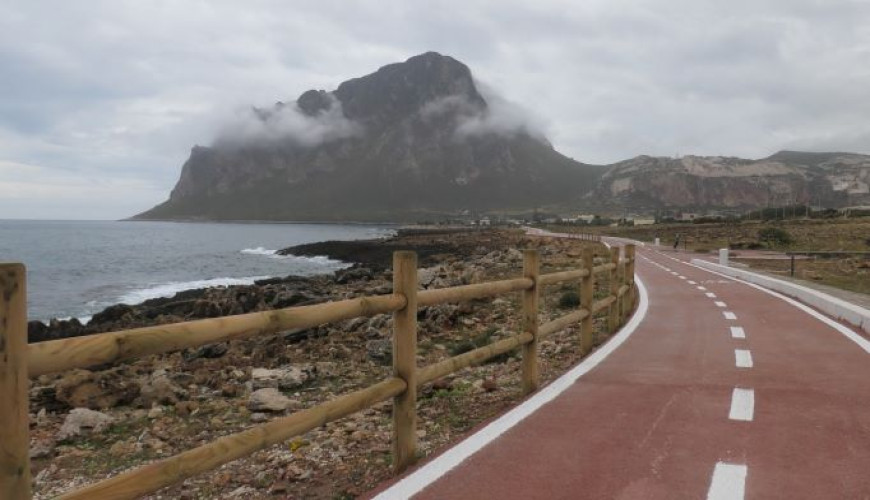
The cycle path linking Cornino to Bonagia is one of the most scenic routes in western Sicily. Located in the territory of Custonaci, this coastal path runs along the sea, offering spectacular views of Mount Cofano, the Gulf of Bonagia and the crystalline waters of Cornino Bay.
It’s a perfect itinerary for those who love cycling immersed in nature: the route is simple and suitable for everyone — families, amateur cyclists and travellers who want to explore slowly and sustainably.
A uniquely panoramic route
The Cornino–Bonagia coastal cycle path covers one of the most charming stretches of Sicily’s western shore.
Along the route you can admire:
- Mount Cofano dominating the panorama
- turquoise sea and natural cliffs
- the Rio Forgia wetland
- the picturesque fishing village of Bonagia
- views over the Gulf of Erice and Monte San Giuliano
The constant presence of the sea and the scent of Mediterranean scrub make the experience unforgettable.
Trail features
- Easy route: suitable for everyone, including children
- Total length: about 6 km
- Surface: asphalt with light dirt sections
- Difficulty: low
- Ideal for: traditional bikes, e-bikes, walks, jogging
This route is perfect for tourists staying in Custonaci, Cornino or San Vito Lo Capo who want an immersive sea-and-nature experience.
Points of interest along the path
- Cornino Bay — panoramic start with clear sea, natural rocks and equipped areas
- Mount Cofano — the trail runs at the foot of the Nature Reserve, offering iconic scenery
- Rio Forgia — natural area frequented by migratory birds and Mediterranean flora
- Torre della Tonnara di Bonagia — one of the most fascinating historic structures on the Trapani coast
- Bonagia village — a small fishing harbour with a historic tuna fishery and typical restaurants
How to reach the cycle path with TDS Transfer
TDS Transfer offers direct, comfortable connections from:
- Palermo Airport (PMO)
- Trapani–Birgi Airport (TPS)
- San Vito Lo Capo
- Custonaci
- Trapani and Erice
Services available:
- Private transfers with driver
- Shuttle on request for groups
- Bike transport
- Custom itineraries for bike or e-bike tours
Perfect for those who want to pedal without worrying about parking, luggage or complex logistics.
6 – The Custonaci Marble Quarries and the Marble Museum
Origin and importance of the quarries
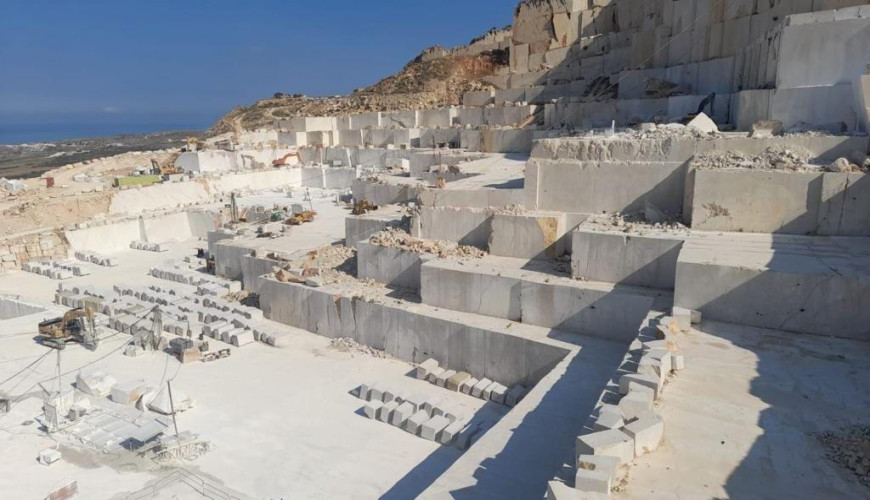
The Custonaci area hosts a significant marble extraction district — historically the second most important basin after Carrara — with about 100 quarries and numerous processing workshops. Marble extraction here has ancient roots, with records dating back to the 16th century.
Today the area produces a large share of Sicilian marble; local sources indicate that roughly 85% of Sicily’s marble and about 15% of Italy’s marble comes from this zone. The quarried stone is used in buildings and monuments in Italy and abroad.
Types of marble and characteristics
One of the most famous varieties is the Perlato di Sicilia (also called “Botticino of Sicily”), an ivory-light marble with brown veins and calcite patches. Other varieties include Libeccio Antico (a polychrome marble used during the Baroque period), Perlatino di Sicilia, Cremino, Mediterraneo Ivory and Nerello di Custonaci.
Geologically, the limestone and marbles are located between Monte Cofano and Monte Sparagio and include Cretaceous carbonate beds.
Quarry area and landscape
The extraction zone covers roughly 3 km² between Monte Cofano and Monte Sparagio. Visually, the white quarry walls leave a strong imprint on the landscape, giving the area a striking aesthetic. Because of this tradition, Custonaci is known as the “International City of Marbles.”
Economic and current use
Quarries are still active and employ modern machinery and updated techniques. A significant portion of production is destined for international export.
Tourism and visits
Although visually impressive, direct access to active quarries is limited for safety reasons; visitors typically observe the white quarry faces from safe viewpoints. There are trekking itineraries (for example, “Cave of contrada Chiova”) that highlight extraction history and panoramic views. In the town center, the Marble & Cave Museum presents the geological history, extraction methods and the tools used by quarry workers.
The Custonaci Marble Museum
What it is
The Marble & Cave Museum in Custonaci is dedicated to telling the geological, industrial and cultural history tied to marble extraction and the speleological heritage of the area.
Purpose
- Educational: to show visitors (tourists, students, enthusiasts) the marble production chain — from quarry rock to worked stone — illustrating techniques and tools.
- Identity & valorization: to reinforce Custonaci’s identity as a “city of marble” and promote the area from a cultural and tourist perspective.
How the museum is organized
- Geology & Stratigraphy: rock samples, surveys and photographs of local stratifications.
- History of extraction: displays of historic tools, photos of the quarries and traditional and modern extraction methods.
- Marble samples: specimens of the various marbles extracted locally, such as Perlato di Sicilia, to appreciate colors and textures.
- Speleology & cave heritage: documentation, maps and information on local cavities and underground structures.
Visiting the area means experiencing a unique industrial-natural spectacle: enormous white rock faces, large machinery, spectacular panoramas and mining history — one of Sicily’s most dramatic industrial landscapes.
7 – Monte Sparagio
Monte Sparagio: flora, fauna and panoramas from the highest peak in the province of Trapani
At 1,110 metres, Monte Sparagio is the highest summit in the province of Trapani and one of western Sicily’s most fascinating natural sites. Located between Custonaci, Buseto Palizzolo and Erice, the massif offers spectacular views, rich biodiversity and trails ideal for trekking, nature lovers and outdoor activities. It’s also easily reachable via transfer services to Custonaci and the surrounding area.
Flora: forests, Mediterranean scrub and highland pastures
Vegetation varies with altitude and microclimates:
- Woodlands and green zones: maritime pine, Aleppo pine, holm oak and oaks, providing cool shaded areas perfect for hikes.
- Mediterranean scrub: myrtle, mastic, heather, rosemary, strawberry tree and broom in spring.
- Alpine pastures and rupicolous plants: aromatic herbs, wild oregano, fennel, rock plants and large wind-swept grasslands; wild asparagus is widespread and likely gives the mountain its name.
Fauna: raptors, small mammals and Sicilian biodiversity
- Mammals: red fox, wild rabbit, weasel, European hedgehog.
- Birds & raptors: buzzard, kestrel, peregrine falcon, little owl and many passerines; migratory raptors can be seen at certain times.
- Reptiles & insects: lizards, non-venomous grass snakes and a variety of endemic insects and butterflies.
Landscape: one of western Sicily’s finest viewpoints
From Monte Sparagio you can enjoy a 360° panorama that includes:
- Monte Cofano and the Gulf of Makari
- Custonaci and Cornino
- San Vito Lo Capo and Monte Monaco
- The Zingaro Reserve
- Erice
- On clear days: Pantelleria
The mix of woods, rocky areas, valleys and high pastures makes Sparagio ideal for photography, hiking and outdoor activities.
How to reach Monte Sparagio from Custonaci with TDS Transfer
Monte Sparagio is accessible from several points; many hikers start from Custonaci (served by TDS Transfer), Palermo, Trapani or nearby airports. Main access points:
- Custonaci – Valle dei Grilli / Purgatory
- Buseto Palizzolo – southern side
- Erice – eastern side
Dirt trails and forest paths make it suitable for trekking and mountain biking.
Why visit Monte Sparagio
Monte Sparagio is a must for visitors to Custonaci, San Vito Lo Capo, Trapani, Erice and Valderice. Its strategic location offers a day immersed in nature, away from mass tourism, with some of the island’s most moving panoramas.
TDS Transfer provides comfortable, rapid transfers (bookable via WhatsApp) from Palermo airport/city, Trapani airport/city and San Vito Lo Capo — ideal for hikers and groups.
8 – Custonaci Watchtowers
The coastal fortification system that once guarded western Sicily
The Custonaci area preserves several of Sicily’s fascinating coastal watchtowers. These towers were part of the extensive 16th-century Spanish defensive network built to protect coasts from Saracen pirates and corsairs. Two important towers in the Custonaci area are:
Torre del Tono
The best-known tower, located at the foot of Mount Cofano on the western side of the reserve.
Features and history
- Built in the 1500s as a coastal lookout
- Part of the Kingdom of Sicily’s coastal defense system
- Used to signal pirate landings with fires and smoke
- Visually connected with towers at San Vito Lo Capo, the east side of Monte Cofano, Erice and Bonagia
Torre della Tonnara di Cofano: history, information and curiosities
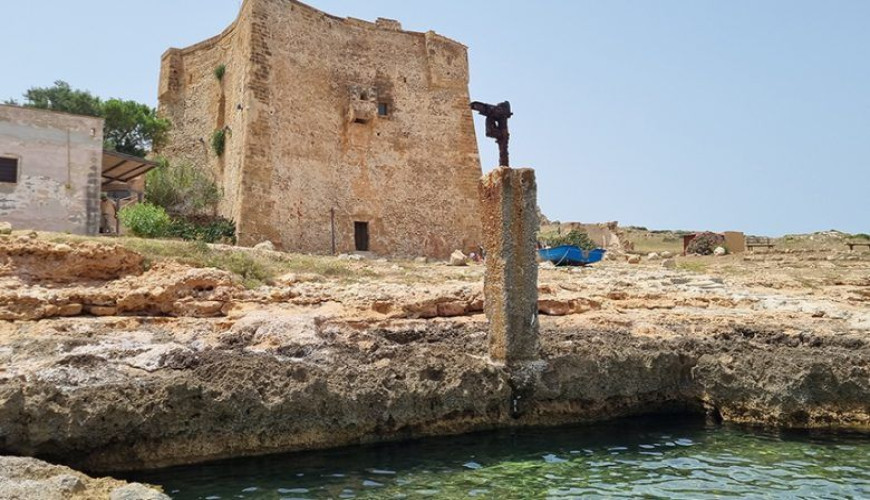
The Torre della Tonnara di Cofano is one of the most fascinating and evocative places in western Sicily. It is located within the Monte Cofano Oriented Nature Reserve, in the territory of Custonaci, in the province of Trapani, and is an important example of coastal defensive architecture as well as evidence of the historic tuna fishing activity.
History of the Torre della Tonnara di Cofano
The tower was built between 1556 and 1560 by order of the Spanish government, at a time when the Sicilian coasts were frequently threatened by pirate and Ottoman raids. It was part of a vast system of coastal defensive towers, designed to spot enemies and protect the territory from sea attacks.
The structure has a very rare feature: its walls are not completely straight, but slightly concave, a strategic choice intended to deflect and weaken cannon shots coming from the sea, increasing the tower’s resistance during sieges.
Over the centuries, the tower remained a key reference point for coastal control and the protection of activities related to the nearby tuna fishery.
In 2006, the Torre della Tonnara di Cofano was acquired by the regional state property and was later restored thanks to public funding. Since 2010, it has been open to visitors again and has become one of the main symbols of the nature reserve.
The Cofano tuna fishery
In front of the tower lie the remains of the Cofano tuna fishery, an ancient tuna-processing facility already active in medieval times. The tuna fishery was of great economic and employment importance for the entire area, passing over the centuries under the control of various local noble families.
On the rocks and along the coast, some basins carved into the stone are still visible, used for processing and preserving the fish. Some of these structures date back to the Hellenistic period (4th–3rd century BC), showing that the area was already frequented and exploited in very ancient times.
The tuna fishery remained active, with ups and downs, until the mid-20th century, when it was definitively shut down.
Architecture of the tower
The Torre della Tonnara di Cofano has a star-shaped square plan with four points, a rather rare form in Sicily and very interesting from both an architectural and military point of view.
It is built of local stone and has very thick walls, exceeding two metres, confirming its defensive function. On the ground floor there is a single large hall with a barrel vault and a cistern carved into the rock, used to collect rainwater.
The upper floor is divided into two rooms and, via a steep staircase, you can reach the terrace, from which you can admire an extraordinary view of the coast, the sea and the entire Monte Cofano promontory.
Historical, cultural and landscape value
Today, the tower is one of the main attractions of the Monte Cofano Reserve, a protected area characterized by trails, unspoilt coves, spectacular cliffs and wild, authentic nature.
The Torre della Tonnara di Cofano is not only a historical monument, but also a unique panoramic point, highly appreciated by hikers, photographers and visitors who want to discover the true essence of western Sicily.
In addition to its historical and environmental value, the place is also surrounded by a legendary aura: according to some interpretations, these lands were crossed by the hero Aeneas, as told in the Aeneid, making the area even more fascinating and mysterious.
Why visit the Torre della Tonnara di Cofano
Visiting the Torre della Tonnara di Cofano means taking a journey through time, among history, sea and nature, in one of the most evocative corners of Sicily. It is an unmissable stop for anyone visiting Custonaci, San Vito Lo Capo, Cornino and the entire Trapani area.
9 – Suburban Park “Cerriolo”
A green area of Mediterranean scrub — dwarf palm (giummarra), euphorbia (camarruni), agave sisalana (zabbara), olive trees, ficus, carobs, pomegranates. The park hosts the statue “Regina Pacis”, a work by local sculptor Giuseppe Cortese, overlooking the reserve’s panorama.
The park still preserves remnants of mule tracks and ancient paths once used to connect hamlets and coastal areas. It’s also known for cliffs and climbing routes; for example, the “Rocca di Cerriolo” area is listed as an active crag with numerous climbing lines.
Location
The park lies along the old mule track that linked the historic center of Custonaci with the village of Scurati, positioned on the rock of “Portella del Cerriolo”.
From here there is a wide view over the Gulf of Bonagia — from Monte Erice in the west to Mount Cofano in the north-east.
Why it’s worth a visit
- Spectacular panorama: one of the best viewpoints over the gulf and coast
- Ideal for a relaxed walk immersed in nature, away from crowded beaches
- A perfect stop for linked excursions: from the park you can continue toward Monte Cofano or Mangiapane Cave
A delightful mix of nature + art + contemplation.
10 – The Porta del Sole and the Cavallo del Sole of Custonaci
Porta del Sole
Where it is
The Porta del Sole is a megalithic monument located on the north-western slope of Monte Sparagio within the municipality of Custonaci. It is identified as a trilithon — two vertical stones topped by a horizontal slab — forming a stone portal.
What it represents
The monument is interpreted as an ancient astronomical calendar: at the winter solstice the sun’s rays align precisely through the trilithon opening at sunset.
It has been compared to a “Sicilian Stonehenge” because of the precision of its alignment and its likely ancient origins.
Why visit
A little-known but highly evocative archaeological element combining nature, archaeology and astronomy. Its elevated position makes sunsets particularly dramatic. Ideal for hikers, panoramic photographers and explorers of unusual sites. Integrated into a TDS Transfer tour, it becomes an exclusive stop combining sea, mountains and nature.
How to visit
Located on a mountain slope, visiting requires a light trek or hiking route. Wear suitable shoes, bring water and a light jacket if visiting at sunset. To experience the solstice alignment (or the aligned sunset effect) arrive before sunset, secure a good viewing spot and prepare for the changing light.
Cavallo del Sole (Horse of the Sun)
A carved megalith symbolizing the territory’s mystery
The Cavallo del Sole is one of Sicily’s most fascinating and lesser-known megalithic monuments. Found between the Porta del Sole and the slopes of Monte Sparagio, it sits in an area rich in prehistoric finds and protohistoric structures — one of the island’s most enigmatic symbols.
What it is
The Cavallo del Sole is a rock-carved megalith representing the stylized silhouette of a galloping horse oriented toward the horizon. The figure was created through a series of incisions and rock shaping. It spans several metres and is clearly visible from above. The monument has a strong symbolic association with solar cycles and, together with the Porta del Sole, forms a unique megalithic complex.
Origins and mystery
Scholars date the Cavallo del Sole to protostoric times, possibly between the Bronze and Iron Ages. The leading theories propose links to:
- solar cults
- seasonal rites of passage
- astronomical observations (solstices and equinoxes)
It may have had ritual functions connected to fertility, agricultural cycles or the light cycle.
Connection with the Porta del Sole
The Cavallo and the Porta del Sole lie in the same area; the trilithon aligns with the winter solstice sunset, suggesting a larger sacred complex similar to ancient astronomical and solar worship sites — hence the nickname “Stonehenge of Custonaci.”
How to reach the Cavallo del Sole with TDS Transfer
The Cavallo del Sole is a mysterious, evocative site on the southern slope of Monte Sparagio — a stone “calendar” aligned with the solstice sunset. Visiting it with TDS Transfer is ideal to avoid secondary roads, dirt tracks and orientation issues.
Typical experience with TDS Transfer
- Departure from Custonaci, San Vito Lo Capo, Trapani or nearby areas in a car or minivan suited for country roads.
- Transfer toward the Monte Sparagio area and a safe place to leave the vehicle.
- Short walk along a natural trail to the monolith.
- Option to schedule the visit at sunset, when the landscape is most atmospheric.
- Return to the pickup point at the agreed time.
The service provides a safe, comfortable and organized experience — suitable for families, groups and lovers of light trekking.
Why visit
Perfect for those who love:
- pristine nature
- spectacular views
- natural archaeological sites
- landscape photography
- mysterious ancient places
Combine it with other local attractions — the Sanctuary of Custonaci, Mangiapane Cave, the Monte Cofano Reserve, the Purgatory viewpoint and Cornino village — for a complete day of sea, mountain and culture.
Where it is
On the mountain slope between Custonaci and Monte Sparagio, in a little-visited natural area reachable only by trails or light trekking. The spot is wild, scenic and steeped in history.
12 - FOODS TDS RECOMMENDS YOU MUST TRY IN CUSTONACI
A journey into the authentic flavors of western Sicily.
Custonaci is famous not only for its sea and nature but also for a rich culinary tradition that blends peasant cooking, local products and Trapani influences.
1 – Busiate with Trapani pesto
Busiate with pesto Trapanese are one of the most iconic dishes of western Sicilian cuisine. Deeply tied to the history of the area — Trapani, Custonaci, Valderice and the countryside at the foot of Mount Cofano — these busiate represent a meeting of rural tradition and Mediterranean influences.
Origins of busiate
Busiate are a fresh pasta typical of the Trapani area, made from durum wheat flour and water. The name comes from the “buso,” a thin iron rod used to wind the dough into the characteristic spiral shape.
This technique produces a pasta that is:
- substantial
- elastic
- perfect for holding thick, aromatic sauces
In Custonaci households, busiate were traditionally made for festivals, winter Sundays and special occasions.
History of the Trapanese pesto
- Pesto Trapanese (locally called agghiata trapanisa) has ancient roots and reflects the influence of Genoese - sailors who landed in the port of Trapani. Locals adapted Ligurian pesto using regional ingredients:
- local almonds
- fresh tomatoes
- Sicilian basil
- red garlic
- extra virgin olive oil
The result is a rich, fragrant sauce that perfectly elevates homemade pasta.
An identity dish of the Trapani tradition
Busiate with pesto Trapanese combine:
- handmade pasta tradition
- local ingredients (almonds, oil, tomatoes, basil)
- Mediterranean memory — a coastal adaptation of a sauce that arrived by sea
In Custonaci every family has their version: some add local pecorino, others prefer a creamier pesto or toasted almonds for a stronger flavour. It remains a must-try for visitors wanting authentic western Sicilian cuisine.
2 – Custonaci fish couscous
Fish couscous of Custonaci is one of the most representative dishes of western Sicilian cooking.
Rooted in the maritime tradition of Cornino Bay and the peasant culture of the inland hamlets, this dish brings together two essential souls of Custonaci’s gastronomic identity.
Origins in the territory
Couscous arrived here through cultural and commercial ties with North Africa. Ancient routes between the Maghreb and western Sicily brought the art of incocciata, later maintained by Trapani fishermen and the tuna fisheries. The tradition spread to Custonaci, where couscous was embraced and adapted to local produce.
Couscous in family tradition
In Custonaci, fish couscous was prepared on big occasions:
- family celebrations
- special Sundays
- festivities linked to the Madonna of Custonaci
- gatherings in the rural districts
The preparation followed a ritual:
The incocciata
Semolina is worked by hand in the mafaradda until soft, separate grains form.
Cooking
Couscous is steamed in the traditional double-pot (couscoussiera) with slow, repeated steaming.
The fish broth
Thanks to proximity to Cornino, the broth uses local catches such as scorpionfish, red gurnard, ray and weever. Each family customizes the recipe with local herbs and spices.
A dish that unites sea and land
Custonaci fish couscous combines:
- durum wheat semolina from the inland
- fresh fish from the coast
- aromatic herbs from surrounding hills
Rich, aromatic and deeply connected to the local landscape, couscous here is often served “homemade style” with a spiced fish broth. You’ll find it in traditional restaurants, seaside venues and agriturismi.
3 – Cassatelle in meat broth: Custonaci’s authentic tradition
Cassatelle in meat broth are one of Custonaci’s oldest and most characteristic dishes — a symbol of peasant cuisine from the countryside between Monte Cofano and Monte Sparagio. Simple but steeped in history, this recipe is still made in Custonaci families during the colder months.
Origins of cassatelle
A cassatella is a handmade fresh pasta, like a small half-moon or a braided ear-shaped pastry, made with durum wheat flour, water and salt. Traditionally, the filling is fresh ricotta, often enriched with chard, pecorino and a light touch of pepper.
The braided cassatella of Custonaci: history, technique and meaning
The braided version is a distinctive feature of the area’s pastry tradition. The braid is not only decorative but an ancient gesture passed down by women of Custonaci as a sign of care, craftsmanship and belonging.
Origins of the braid
Born in rural kitchens, women would cut thin strips of dough, shape them by hand and artistically braid them around the ricotta filling — a time-consuming process often done collectively by mothers, daughters and grandmothers. The braid became a symbol of festivity and abundance.
Meaning of the braid
The braid symbolizes:
- family unity
- containment and protection
- continuing female artisanal traditions
- care and patience
At Custonaci, the braided cassatella is considered cultural heritage as much as a dessert.
Why it’s special
The braid gives the cassatella:
- a unique appearance
- full artisanal authenticity
- a crispier texture after baking
- a strong link to local festivities and family rituals
The meat broth
Cassatelle are served in a rich, fragrant meat broth made with boiling cuts, marrow bones, carrots, onion, celery and aromatic herbs. This slow, homemade preparation makes the dish particularly nourishing and ideal for winter and windy inland days.
An identity dish of Custonaci
Cassatelle in meat broth form part of the culinary memory of the town: eaten at Sunday lunches, in colder months and during intense agricultural work. Today they survive mainly in domestic kitchens and on request in a few local eateries.
4 – Pane cunzatu of Custonaci (seasoned bread) — origin and history
Pane cunzatu is one of Sicily’s most iconic and popular traditional dishes, especially rooted in Custonaci’s rural districts like Purgatorio, Baglio Messina and Sperone and the countryside around Monte Cofano and Monte Sparagio. Born as a simple peasant meal, today it is a symbol of territorial cuisine celebrated for its genuineness.
Ancient origins
Pane cunzatu originated as the workers’ meal: homemade bread that had to last for days, typically made from durum wheat and baked in wood ovens. During long agricultural workdays (harvest, olive picking, herding), it was not possible to prepare elaborate dishes; bread was therefore “cunzatu” — seasoned — with whatever the land or pantry provided.
Traditional Custonaci ingredients
Pane cunzatu in Custonaci is distinguished by simple, authentic local ingredients:
- local extra virgin olive oil from small rural presses
- oregano from Monte Cofano, famed for its aroma
- fresh garden tomatoes
- salted anchovies from the Trapani fisheries
- fresh primo sale cheese made by local shepherds
Often the bread is split, briefly warmed and generously dressed — an energetic, tasty meal perfect for the fields.
“The poor Sunday bread”
For less wealthy families, pane cunzatu was also the humble Sunday meal when meat could not be afforded. Its simple condiments, good oil and fresh cheese made it a festive dish despite its modesty.
Link to Custonaci and territory
Although common across the Trapani area, Custonaci’s version retains distinctive traits due to:
- wild mountain oregano
- ocal extra virgin olive oil
- fresh shepherd cheese
- handmade durum wheat bread baked in wood ovens
This makes it an identifying product strongly tied to the town’s food culture.
Pane cunzatu today
Pane cunzatu remains a favourite among visitors and locals; it is sold in sandwich shops, delis, summer kiosks and at local festivals. It’s typically eaten:
- during a day at Cornino beach
- on hikes to Monte Cofano
- at village fairs
- as a quick, genuine meal from local bakeries and bars
Classic ingredients in Custonaci: hot bread, local oil, tomato, oregano, primo sale cheese, anchovies. Economical, tasty and perfect by the sea.
5 – Custonaci caponata: history and tradition of a signature dish
Caponata of Custonaci is a highly representative local preparation — born in the countryside that includes Purgatorio, Baglio Messina, Cornino, Monte Cofano and the rural districts at the foot of Monte Sparagio. This version of the famous Sicilian dish has roots in peasant cooking, where families used garden produce to create simple but flavourful recipes.
Origins
Caponata in Sicily began as a poor-man’s dish made with summer vegetables and preserved for later months. In Custonaci, with small family gardens and abundant fresh ingredients, a local variant developed with pronounced flavour and aromatic richness. Families made caponata at summer’s end, preserved it in jars and served it at Sunday lunches, religious feasts and after harvest gatherings.
Distinctive features of Custonaci caponata
This caponata stands out for local additions:
- toasted almonds from the area, adding sweet crunch
- garden tomatoes and onions, grown in red local soils
- capers and olives typical of the Trapani tradition
- traditionally fried eggplant, cubed and fried in hot oil
When it was eaten
Caponata was the quintessential summer dish, enjoyed:
- at village festivals
- after wheat harvesting lunches
- during days spent at Cornino
- at family gatherings in the farmhouses and hamlets
Each family kept its own recipe, passed down through generations.
A local gastronomic heritage
Custonaci caponata is a fundamental part of the area’s culinary memory, telling the story of families and their land by combining seasonality, simplicity, local produce and peasant tradition.
6 – Cheeses and Ricotta of Custonaci: history, tradition and pastoral culture
Cheeses and ricotta from Custonaci are among the most authentic culinary excellences of western Sicily. Their history is deeply linked to the pastoral tradition that for centuries has shaped rural life in the districts between Monte Cofano, Monte Sparagio, Purgatorio and Baglio Messina. The quality of the milk, the territory’s abundance of wild herbs and the skill of local cheesemakers have produced unique, recognizable products.
Origins of pastoralism in Custonaci
Pastoralism is one of the area’s oldest activities. Early records date back to the medieval period, when small rural settlements grazed sheep and goats on the hilly and mountain pastures. The mild climate, calcareous soils and the abundance of aromatic herbs such as oregano, thyme, wild fennel and rosemary produce a fragrant, rich milk ideal for cheesemaking.
Traditional cheese production
For centuries Custonaci cheeses were made in farmhouses and bagli using methods passed down through generations. Representative products include:
- Tuma — a fresh sheep’s cheese, unsalted or lightly salted, used in local cooking for fillings and everyday dishes.
- Primo sale — a fresh, tasty cheese obtained from tuma after brief aging; often flavored with pepper, olives or local herbs.
- Pecorino — the aged cheese symbol of the area; with longer maturation it has an intense flavour and compact paste, ideal for storage during winter months.
Ricotta: the heart of Custonaci tradition
Sheep ricotta is one of the area’s most beloved products.
It is eaten fresh, used as filling for cassatelle, in local sweets and as a condiment for first courses and rustic dishes. Ricotta was a precious food, often shared or gifted between families and neighbours — a symbol of hospitality.
The importance of pastures for flavour of the Cheeses
The taste of Custonaci cheeses and ricotta comes directly from the grazing: flocks feed on
- wild herbs,
- aromatic plants and
- small shrubs typical of the Mediterranean scrub.
This natural diet gives the milk a distinctive aromatic profile found in every cheese produced locally.
A living tradition
Until the mid-20th century pastoralism was an integral part of everyday life. Families produced cheeses and ricotta in small dairies, heating milk in copper cauldrons, adding natural rennet and shaping forms in wicker moulds. Today this tradition endures thanks to small producers who preserve ancient techniques.
Cheeses of Custonaci today
Production remains artisanal and tied to the land. In local trattorie you can still find pecorino, primo sale and fresh ricotta — staples of many typical dishes and symbols of the area’s gastronomic identity.
7 – Fresh Fish from Cornino
How to Prepare and Enjoy Fresh Fish in Custonaci
Custonaci, with its clear waters between Cornino, Monte Cofano, and the historic Tonnara di Cofano, is one of the most authentic areas in Sicily to enjoy very fresh fish. Here, the maritime tradition meets the simple and genuine cuisine of the Trapani coast, offering dishes that tell the deep bond between the community and the sea.
Fresh Fish in Custonaci: How to Recognize It
Thanks to small local fishermen, the catch reaches the table within just a few hours. Local fresh fish can be recognized by:
- Bright, clear eyes, never cloudy
- A light scent of the sea, not strong
- Firm, not flabby flesh
- Tight, well-attached scales
- Red or bright pink gills
Among the most common species are mackerel, anchovies, sardines, octopus, squid, cuttlefish, sea urchins, scorpionfish, sea bream, red mullet, swordfish, small tuna, and mixed fry fish (paranza).
How to Prepare Fresh Fish According to Tradition
Custonaci cuisine enhances the quality of the catch with simple, quick, and aromatic preparations.
1. Grilled blue fish
The most traditional method.
Marinated with:
- Local olive oil
- Lemon
- Cofano oregano
- A pinch of salt
Then grilled, often directly along the seafront of Cornino in fishermen’s homes.
2. “A strascinasale” octopus
One of the most loved recipes:
Octopus boiled in water with bay leaves
Cut into pieces
Seasoned with oil, salt, lemon, and oregano
Fresh, aromatic, perfect for summer days.
3. Trapani-style fish soup
A great classic:
- Scorpionfish, red mullet, gurnard
- Tomato, garlic, parsley
- Slow cooking to extract the full flavor of the sea
Served with toasted homemade bread.
4. Fish couscous
Also widespread in Custonaci, following the Trapani tradition:
- Hand-rolled semolina
- Fish broth made with scorpionfish, grouper, or gurnard
- Light spices
- Long steam cooking
Served as a main dish.
It is one of the most representative recipes of the area.
5. Fried mix of small fish (Paranza)
Small local fish, floured and fried in hot oil.
Crispy, fragrant, and always present in the restaurants of Cornino.
6. Sea urchins
When fishing is allowed, sea urchin pasta is a unique experience:
- Spaghetti
- Very fresh sea urchin flesh
- Extra virgin olive oil
- A very light sauté, or none at all, to preserve the pure flavor
A dish that represents the purity of the sea of Custonaci.
Where to Enjoy It in Custonaci
Those arriving in the area with TDS Transfer can easily discover:
- Seafront restaurants in Cornino – Specializing in grilled fish, couscous, and raw seafood
- Traditional trattorias in the town center – Offering ancient recipes passed down through generations
- Inns in the rural districts (Purgatorio, Sperone, Baglio Messina) – Perfect for those seeking authentic flavors and traditional cooking
- Local fish markets
How to Enjoy a Complete Experience
To savor fresh fish like a true local:
- Choose the catch of the day, not farmed species
- Prefer simple recipes, because local fish is already full of flavor
- Pair it with Sicilian white wine, such as Grillo or Catarratto
- Try the fried paranza at least once
- Visit Cornino at sunset: it is the best time for a seaside dinner
Why Taste It Right Here
Fresh fish from Custonaci is not just food: it is territory, culture, sea, and tradition.
Every dish tells the story of fishermen’s lives, the ancient tuna fishery, the scent of the coast, and the simplicity of Sicilian cuisine.
8 – Busiate with Pasqualora Sausage Stew and Pork Rind from Custonaci
Busiate with pasqualora sausage stew and pork rind from Custonaci represent one of the richest, oldest, and most identity-defining dishes of the gastronomic tradition of western Sicily.
This recipe tells centuries of rural culture connected to the districts of Purgatorio, Baglio Messina, Sperone, and the territories surrounding Monte Cofano and Monte Sparagio.
Pasqualora Sausage: A Historic Ingredient
Pasqualora sausage is a traditional specialty prepared during the Easter period, when farm families worked pork meat.
Typical characteristics:
- Fresh meat hand-cut
- Wild fennel aroma
- Light spicing
- Soft and flavorful texture
It was a “festive” sausage, intended for important lunches and family celebrations.
The Role of Pork Rind
Pork rind was added to the stew to enrich the sauce and avoid wasting any part of the animal. During long cooking, it releases natural gelatin, making the sauce:
- Thick
- Velvety
- Very rich in flavor
It is a typical element of ancient rural recipes from the Custonaci area.
Busiate: Handmade Pasta of Custonaci Families
Busiate is the traditional pasta of the Trapani area. It is made by twisting the dough around a thin rod (buso) to create its spiral shape.
In Custonaci, it was prepared:
- At Easter
- On important Sundays
- During religious festivities
- For large family gatherings
Its rough surface holds thick sauces perfectly, such as pasqualora stew.
The Traditional Stew: A Rustic Recipe
The sauce is simmered slowly for hours, following traditional rural cooking methods. Main ingredients:
- Pasqualora sausage
- Pork rind
- Red onion
- Fresh tomatoes or tomato sauce
- Local red wine
- Wild fennel
- Bay leaves
- Extra virgin olive oil from the countryside of Custonaci
The long cooking time creates a rich, aromatic, and intensely flavorful sauce.
When This Dish Was Prepared
Busiate with pasqualora sausage stew and pork rind was typical of:
- The Easter period
- District festivals
- Religious celebrations
- Gatherings in farmhouses
- Meals after hard agricultural work
It was considered a special dish, reserved for important days.
A Symbolic Dish of Custonaci
This preparation represents the essence of the town’s traditional cuisine: handmade pasta, the aromas of wild herbs, the value of sharing, and the intense flavors of rural cooking.
Even today, it is still prepared in local homes and in some trattorias that preserve traditional recipes.
9 – Oil and Wine of Custonaci
The excellences of the land told by TDS Transfer
The province of Trapani, and especially the Custonaci area, has for centuries been rich in agricultural traditions linked to the production of extra virgin olive oil and high-quality wines. Two symbolic products of Sicilian gastronomic culture, increasingly sought after by travelers who want to discover the land through authentic flavors and local production.
Thanks to TDS Transfer services, it is possible to reach olive mills, wineries, and farms in a comfortable, safe, and personalized way.
EXTRA VIRGIN OLIVE OIL OF CUSTONACI
Local cultivars
The extra virgin olive oil of the Trapani area is famous for its quality and for the use of native varieties such as:
- Nocellara del Belice
- Cerasuola
- Biancolilla
These olives, grown between sea and hills, produce an oil with a unique character:
- Green color with golden reflections
- Aroma of fresh grass and green tomato
- Medium-intense fruity taste
- Slightly bitter and spicy finish
A Highly Valued Product
The oil from this area is often certified with quality labels such as PDO or Organic, and many mills use traditional methods such as:
- Hand harvesting
- Cold pressing
- Short supply chain
It is ideal for Mediterranean cuisine, fish dishes, vegetables, and local specialties.
For visitors, it represents one of the most authentic gastronomic experiences of western Sicily.
WINES OF CUSTONACI, ERICE, AND THE PROVINCE OF TRAPANI
A Territory Perfect for Viticulture
The hills between Custonaci, Erice, and Valderice host vineyards exposed to sea winds that give the wines a pleasant minerality and great freshness.
The area is also part of prestigious denominations such as DOC Erice.
Main grape varieties:
- Catarratto (fresh, aromatic whites)
- Grillo
- Inzolia
- Frappato
- Nero d’Avola
White wines are perfect with fish and coastal dishes, while reds pair beautifully with cheeses, meats, and inland products.
Local Wineries
The area is home to historic wineries and family-run businesses that offer:
- Tastings
- Vineyard tours
- Guided experiences about wine production
A perfect opportunity for those who want to enjoy a wine tourism experience during their stay in Sicily.
TDS TRANSFER: HOW TO REACH OIL MILLS AND WINERIES
TDS Transfer offers convenient connections from:
- Palermo Airport
- Trapani Airport
- San Vito Lo Capo
- Custonaci
- Trapani and Erice
You can book:
- Personalized oil and wine tours
- Private transfers for winery visits
- On-demand shuttle services
Perfect for couples, families, small groups, or travelers who prefer not to rent a car.
Why Are the Oil and Wine of Trapani and Custonaci So Special?
- Mineral-rich soil
- Ideal climate between the sea and mountains
- Centuries-old farming traditions
- Family-run businesses
- Natural and authentic products
These elements make these excellences true ambassadors of Sicily around the world.
10 – Honey and Local Products
Honey of Custonaci
The Excellence of Beekeeping in Western Sicily
Custonaci, in the heart of the province of Trapani, is one of the most suitable areas in Sicily for the production of high-quality artisanal honey.
Here, beekeeping is carried out by small family farms and local beekeepers who work naturally, respecting the cycles of the bees and the Mediterranean environment.
The territory, characterized by Mediterranean scrub, olive groves, citrus orchards, and wild vegetation, offers bees a great variety of flowers, producing fragrant, aromatic, and pure honey.
Types of Honey Produced in Custonaci
Thanks to the botanical diversity of the area, several types of honey are produced in Custonaci, including
Sulla honey – Very common in western Sicily
Characteristics:
- Light color
- Delicate aroma
- Light, velvety taste
- Ideal for children and herbal teas
Orange blossom honey (Zagara) – From citrus flowers
Characteristics:
- Intense scent
- Fresh floral notes
- Sweet and slightly citrusy flavor
- Perfect for desserts, yogurt, and fresh cheeses
Eucalyptus honey – Typical of coastal areas
Characteristics:
- Balsamic aroma
- Strong flavor
- Excellent for the throat and respiratory tract
Wildflower honey (Millefiori) – The most representative honey of the area
Characteristics:
- Flavor varies depending on blooming
- Rich in minerals
- Complex aroma
It best expresses the biodiversity of the territory.
A Perfect Land for Bees
The environmental conditions of Custonaci make local honey particularly valuable:
Dry and well-ventilated climate, proximity to the sea, absence of large industrial areas, wide presence of wild plants, and very low pollution levels.
Beekeepers often use artisanal techniques, without chemicals, guaranteeing a natural, pure product rich in beneficial properties.
Why Is Honey from Custonaci Special?
- Cold-extracted
- Non-industrial processing
- High quality standards
- Authentic flavors
- Strong link to local agricultural tradition
It is a perfect product for visitors who want to take home a true taste of Sicily.
How to Reach Producers and Beekeepers with TDS Transfer
Many local beekeepers offer:
- Educational visits
- Tastings
- Mini-tours among hives and blooms
- Direct sale of artisanal honey
TDS Transfer makes it easy to reach farms in and around Custonaci thanks to:
- Private transfers
- Tailor-made tours
- Shuttle services also from Palermo and Trapani
- Connections from San Vito Lo Capo
Perfect for tourists, families, and groups who want to discover local gastronomy without stress.
11 – Arancine of Custonaci: History, Tradition and the Authentic Flavours of Western Sicily
The arancine of Custonaci are one of the most beloved gastronomic symbols of western Sicily. This famous street food comes from a very ancient tradition and today continues to tell the culinary identity of the area, combining genuine ingredients, artisanal techniques and recipes passed down through the town’s families.
Origins of the arancina in Sicilian tradition
The origins of the arancina date back to the period of Arab rule in Sicily (9th–11th centuries), when rice was introduced to the island and was prepared in small spiced spheres. Over time the recipe was enriched with local ingredients, evolving into the typical round arancina characteristic of western Sicily — including the Custonaci area.
This rounded shape recalls an orange (hence the name “arancina”) and is one of the most immediate symbols of Sicilian street food.
The arancina in Custonaci: characteristics and local identity
The arancine of Custonaci are prized for their crispy exterior, soft heart and the use of local ingredients. The local culinary tradition — influenced by both rural and maritime worlds — makes these arancine unique.
Main characteristics
- High-quality rice, creamed with broth and saffron
- Golden, crunchy frying obtained with artisanal technique
- Honest, home-style fillings tied to Custonaci household cooking
- Use of local products such as provola, sausage, ricotta and fresh fish
The most common fillings in Custonaci
Arancina al ragù
The most traditional version, with a light ragù, peas and tomato, following the typical recipe of western Sicily.
Arancina al burro
With ham, mozzarella and béchamel — perfect for those who love a creamy flavour.
Arancina with sausage and provola
One of Custonaci’s most identifying variations, highlighting local meat and cheese production.
Fish arancina
Popular in seaside areas: tuna, red mullet or the fish of the day, inspired by the maritime tradition of Cornino and Cofano.
Seasonal recipes
At certain times of year you can find arancine made with sea urchins or with mushrooms from Monte Sparagio.
When to enjoy arancine in Custonaci
Arancine are part of daily life in Custonaci and can be found:
- in bars and rosticcerie in the town and surrounding area
- in artisan bakeries
- in seafront places in Cornino
- during festivals, fairs and popular events
They are perfect for a snack during a hike on Monte Cofano, an afternoon at the beach, or a visit to the Grotta Mangiapane.
Why try arancine in Custonaci
Tasting an arancina in Custonaci means experiencing authentic gastronomy. Visitors arriving with TDS Transfer can discover:
- the blend of rural and maritime cuisine
- recipes handed down in local families
- fresh, local ingredients
- intense, genuine flavours
- the true identity of western Sicily
12 – Babbaluci cu l’agghia and Crastuna ca muddica (snails)
Babbaluci cu l’Agghiai: history, meaning and the traditional Custonaci recipe
Babbaluci cu l’agghiai are one of the most representative dishes of Sicilian culinary tradition and a symbol of the authentic cuisine of Custonaci, a Trapani village rich in culture, rituals and land-based flavours. This tasty speciality, deeply rooted in local history, continues to attract visitors and lovers of traditional cooking.
Origin and history of babbaluci cu l’agghiai
Babbaluci — land snails — were collected by Custonaci’s peasants after the first summer rains. Considered a “poor” but nutritious food, they were an important resource for families. In Custonaci the dish has always been associated with popular festivals, moments of conviviality and peasant traditions that celebrate the close bond with nature.
Cultural value
Garlic — “agghia” in the local dialect — had symbolic meaning: protection, health and purification. In many families the dish was prepared for celebrations and gatherings, becoming a true ritual of sharing. Babbaluci cu l’agghiai are not only typical food but also an identifying trait of Trapani and Custonaci cuisine, a bridge between past and present.
Ingredients for Babbaluci cu l’agghiai (traditional Custonaci recipe)
- 1 kg babbaluci (land snails)
- 6–8 garlic cloves
- Fresh chopped parsley
- Extra virgin olive oil
- Salt
- Pepper or hot pepper (optional)
- Bay leaf (optional)
Preparation
Purging
Leave the babbaluci to purge for 24 hours in a covered colander. Rinse several times until the water runs clear.
Initial cooking
Put the babbaluci in a pot with cold water so they come out of their shells. Gradually raise the temperature until the water begins to boil.
Boiling
Add salt and a bay leaf. Cook for about 20–25 minutes, then drain.
Prepare the agghia
Mix extra virgin olive oil, chopped garlic, parsley and (if desired) pepper or hot pepper.
Final seasoning
Toss the babbaluci in the dressing or mix them in a large bowl. Let rest for 10 minutes before serving.
How to eat them according to Custonaci tradition
Babbaluci cu l’agghiai are eaten:
- with a toothpick, or
- directly from the shell, as in the authentic Sicilian custom.
The strong taste of garlic, the scent of parsley and the delicacy of the snail create a perfect balance for lovers of ancient, genuine flavours.
Why taste babbaluci in Custonaci
Choosing Custonaci to try this dish means immersing yourself in local traditions, the scents of typical cooking and recipes passed down through generations. Babbaluci cu l’agghiai are one of the most authentic gastronomic experiences in the Trapani area — a must for those who want to discover the real Sicily.
Crastuna ca muddica
Crastuna ca muddica (snails with toasted breadcrumbs) of Custonaci: history, recipe and tradition
Crastuna ca muddica, a typical dish of Custonaci, are one of the symbols of Sicilian peasant cuisine. This simple but flavourful recipe tells the story of Custonaci families, rural life in the Trapani countryside and the gastronomic traditions tied to festivals and communal eating.
Origin and history of the recipe
“Muddica” (toasted breadcrumbs) replaced cheese in peasant families, enriching the dish and adding crunch. The “agghia” condiment (garlic, parsley and oil) not only flavours but symbolises protection and health in popular tradition.
Typical ingredients
- 1 kg cleaned snails (babbaluci or crastuna)
- 6–8 chopped garlic cloves
- Fresh chopped parsley
- Extra virgin olive oil
- Salt
- Pepper or hot pepper (optional)
- Toasted breadcrumbs (“muddica”)
- (Optional) bay leaf for cooking
Traditional preparation
Purging the snails
Leave them in a covered colander for 24 hours, changing the water several times until it runs clear.
Cooking the snails
Boil them in cold water, bringing slowly to the boil until they come out of their shells. Add salt and a bay leaf.
Preparing the agghia
In a pan, heat extra virgin olive oil, chopped garlic, parsley and, if desired, pepper or hot pepper.
Combine the snails
Sauté the snails in the agghia or toss them in a large bowl.
Add the muddica
Toast the breadcrumbs in a pan with a little oil until golden, then add them to the snails. Mix well and let rest for 10 minutes before serving
The 10 Traditional Sweets of Custonaci You Absolutely Must Try
The sweets of Custonaci: flavours, emotions and the memory of a village
Custonaci is not just a place to visit: it’s an experience you live through its aromas, traditions and — above all — its sweets. In this village between mountain and sea, every recipe tells a story, every ingredient holds meaning, and every bite is a dive into the memory of a people who have never stopped passing their roots down.
A heritage of taste that smells like home
The ancient sweets of Custonaci are born in family kitchens, when time seemed to flow more slowly and festivities were eagerly awaited for their special flavours. Here, sugar, ricotta, orange zest, honey and almonds are not mere ingredients: they are symbols of celebration, abundance, devotion and care.
The old sweets of Custonaci recount centuries of family traditions and confectionery craft handed down from generation to generation. Each recipe springs from the meeting of simple, authentic ingredients — almonds, honey, ricotta, cinnamon, citrus zest — and the creativity of the women of Custonaci who once prepared these desserts for religious festivals and special occasions.
The fact that many of these sweets are tied to moments of celebration (Christmas, religious feasts) reinforces the connection between local gastronomy and communal life.
1 — Fig Cookies “Buccellati” and Almond Cookies (viscotta ri ficu e di mennula)
Fig “buccellati” cookies of Custonaci: history and tradition
The fig-filled “buccellati” cookies of Custonaci are among the oldest and most identifying sweets of Sicilian culinary tradition. These are cookies filled with dried figs and local ingredients, prepared according to recipes passed down for generations in Custonaci families. They tell the rural history of the area and are part of Custonaci’s Christmas and popular festival traditions.
Origins of fig cookies in Custonaci
The tradition of fig-stuffed cookies comes from the Sicilian peasant world, where figs were sun-dried to be eaten through the winter. In Custonaci this custom became a true gastronomic heritage: families prepared “viscotta ri ficu” for Christmas, religious celebrations and major festivities. The addition of decorative touches — small cuts, incisions and artistic shapes — produced the variant called “buccellati,” a term recalling finely carved and carefully worked biscuits.
Characteristics of fig “buccellati” cookies
Custonaci’s fig cookies are distinguished by:
- A soft, fragrant dough made from flour, sugar, lard or oil, eggs and leavening.
- A rich, aromatic filling of chopped dried figs, almonds, honey, orange or lemon zest, cinnamon and sometimes cocoa or chocolate.
- Traditional decorations with incisions and cuts that make each cookie unique.
- Typical colours and aromas thanks to local citrus and traditional Sicilian ingredients.
The filling reflects the authentic flavours of the area and evokes the sweet cooking of Custonaci households.
When they’re made and how to enjoy them
In Custonaci fig cookies are traditionally prepared:
- during the Christmas period,
- for religious festivals and fairs,
- as gifts for family, friends and neighbours.
Today they are available year-round in local bakeries and pastry shops — perfect for breakfast, an afternoon snack or a dessert paired with a local sweet wine. They are also popular souvenirs for visitors seeking authentic gastronomic gifts.
Almond cookies (viscotta ri mennula)
Their main characteristic is an almond paste heart that keeps them soft inside and slightly crisp outside, perfumed with orange or lemon zest and often dusted with powdered sugar.
Ingredients for about 20 cookies
For the shortcrust pastry
- 300 g all-purpose flour
- 100 g sugar
- 150 g cold butter, cubed
- 1 whole egg + 1 yolk
- Grated zest of 1 lemon or orange
- A pinch of salt
For the almond filling
- 200 g peeled sweet almonds
- 150 g sugar
- 1 egg white
- Grated lemon or orange zest
- 1 tablespoon of typical Sicilian liqueur (optional, e.g. Marsala or Strega)
For decoration
- Icing sugar to dust
Method
Make the pastry
Mix flour and salt. Add the cold butter and work quickly with your fingers until you obtain a sandy texture. Add sugar, eggs and citrus zest; knead until you have a smooth dough. Wrap in cling film and chill for at least 30 minutes.
Prepare the almond filling
Finely grind the almonds with sugar and citrus zest. Add the egg white and liqueur, mixing until homogeneous.
Form the cookies
Roll the pastry to 3–4 mm thickness. Cut circles or rectangles. Place a little almond filling in the centre. Fold to close and seal the edges.
Bake
Place cookies on a lined tray and bake in a preheated oven at 180°C for about 15–20 minutes until lightly golden.
Decorate
Once cool, dust with icing sugar.
2 — Sicilian Cannoli (cannola)
Custonaci cannolo: history, tradition and the authentic flavours of western Sicily
The cannolo of Custonaci is one of the most representative sweets of Sicilian tradition, reinterpreted locally with genuine ingredients and artisanal methods passed down through generations. Its crunchy shell, the intense aroma of ricotta and the care in its preparation make it a symbol of the area’s gastronomic identity, loved by residents and visitors alike.
Origins of the cannolo in Sicilian tradition
The cannolo has ancient roots: according to tradition it dates to the Arab–Norman period, when ricotta and fried sweets spread across the island. In the Middle Ages it was made in convents, farmhouses and at popular festivals as a dessert of joy and abundance.
Over time the cannolo became “the king” of Sicilian sweets, varying by area. In the Trapani area and in Custonaci the recipe took on distinct traits linked to pastoral traditions and local products.
The Custonaci cannolo: local characteristics
The cannolo of Custonaci stands out for a few features that distinguish it from other Sicilian versions:
- The crunchy shell — made with flour, wine or vinegar, sugar, lard and a light hint of cocoa or cinnamon. The dough is rolled by hand, wound around a cylinder and fried slowly to achieve a light, crisp texture typical of home pastry-making.
- Local ricotta — Custonaci is known for its dairy production. The filling is often fresh sheep’s ricotta, sieved and mixed with sugar, lemon zest and vanilla, yielding a more genuine, aromatic cream, less elaborate and more authentic than other variants.
- Traditional decorations — depending on families and pastry shops, cannoli may be finished with pistachio crumbs, candied orange peel, chocolate chips or a dusting of icing sugar.
Custonaci’s tradition leans to a simpler style faithful to the origins, favouring ricotta quality and freshness.
History in Custonaci
In Custonaci the cannolo is tied to rural life and religious celebrations. It was made:
- during Carnival,
- at the Madonna of Custonaci festivals,
- for family celebrations such as weddings and baptisms,
- at Sunday country gatherings.
Each family guarded its own recipe — sugar quantities, aromatics, ricotta sieving and shell-frying technique — creating local variants united by a strong bond with pastoral culture.
How to enjoy it today
Today the Custonaci cannolo is found in:
- artisan pastry shops,
- historic bakeries,
- seafront cafés in Cornino,
- agritourisms and farmhouses,
- food events and popular festivals.
Best eaten filled at the moment to keep the shell crisp and the filling fresh.
Why the Custonaci cannolo is special
- Uses local sheep ricotta, fresher and more aromatic.
- Shells are hand-fried according to family tradition.
- The flavour is authentic and rustic, true to peasant origins.
- The dessert tells the area’s story, from farmhouses and convents to modern pastry shops.
- It’s an integral part of the gastronomic experience for visitors arriving with TDS Transfer.
3 — Fried Cassatelle (cassateddi)
Custonaci cassatelle fritte: history, tradition and authentic flavours of western Sicily
Fried cassatelle of Custonaci are among the most iconic sweets of western Sicilian tradition. Soft, fragrant and filled with fresh ricotta, they symbolise the home cooking of the area and are linked to festivities, sharing and the rural culture that characterises Custonaci and the surrounding countryside.
Origins of fried cassatelle
Cassatelle originate in the peasant tradition of the area. They were once prepared by families during:
- Holy Week,
- spring festivals,
- family celebrations,
- workdays in the fields,
- acts of hospitality for relatives and neighbours.
The dessert arises from the availability of simple, local ingredients: flour, eggs, citrus, fresh sheep ricotta and frying oil. Over time the recipe became a gastronomic heritage passed down through generations.
What cassatelle are
Cassatelle are half-moon fried pastries, resembling a large filled raviolo. Their distinctive balance is:
- a crunchy exterior,
- a soft dough,
- the natural sweetness of the ricotta,
- the citrus aroma typical of western Sicily.
The dough
Made from local flour, sugar, lard or oil, eggs and citrus zest; rolled thin and cut into semicircles for filling.
The filling
A cream made from very fresh sheep ricotta, sugar, cinnamon, lemon zest and sometimes chocolate chips or dark flakes. Custonaci ricotta from local farmsteads gives the filling a rich, creamy, unmistakable flavour.
The frying
Cassatelle are fried in hot oil until:
- golden on the surface,
- puffed and crisp,
- with a crunchy edge and soft, fragrant interior.
They are served warm or lukewarm and dusted with granulated or icing sugar.
Why they are special in Custonaci
- High-quality ricotta due to the strong pastoral tradition.
- Artisanal recipes passed down in local families.
- Use of local citrus that gives freshness and aroma.
- Frying executed with traditional techniques.
- Strong ties to religious and popular traditions.
They recall the flavours of the past, made with humble yet identity-rich ingredients.
When and where to taste them
Cassatelle fritte can be found:
- in Custonaci bakeries,
- in local artisan pastry shops,
- in agritourisms and farmhouses,
- at festivals and popular fairs,
- in some traditional trattorias along the Cornino coast.
Visitors arriving with TDS Transfer can include a cassatelle tasting in a food itinerary dedicated to local sweets.
4 — Sfince (spinci)
The sfince of Custonaci: history, tradition and flavours of western Sicily
The sfince of Custonaci are an ancient sweet deeply rooted in western Sicilian gastronomic culture. They are soft fritters made with potatoes, flour, anise seeds, citrus zest, yeast and other humble ingredients, fried and then sprinkled with sugar and cinnamon.
Origins of the sfince
Sfince have very ancient origins. The name and recipe recall the Arab influence in Sicily: it is thought the term derives from the Arabic “isfang,” meaning “sponge,” referring to their soft, porous texture.
The dough is left to rise for a long time until it becomes very light and airy.
Over the centuries the sweet was adopted by rural communities in the Erice countryside and the Custonaci area, becoming a symbol of:
- abundance,
- celebration,
- family tradition,
- sharing.
In Custonaci families they were traditionally prepared for religious celebrations and local feasts. The custom of making them during the Feast of the Immaculate Conception is firmly rooted locally.
The sfincia of Custonaci today
In recent decades a festival dedicated to this sweet — the Spincia Fest in Custonaci — has emerged, celebrating the sfincia as a cultural and gastronomic symbol.
Visitors arriving with TDS Transfer can include sfincia tasting as part of a food tour of the area’s typical sweets.
Why Custonaci’s sfince are special
- The frying is done by hand following ancient techniques.
- They maintain a strong link with family and religious culture.
- They are simple but deeply representative of local identity.
5 — Frutta Martorana (matturana)
Frutta martorana: history, tradition and the meaning of Sicily’s sweet art
Frutta martorana is one of the most famous and enchanting sweets of Sicilian tradition. Known for its realistic shapes and vivid colours that mimic fresh fruit, martorana is a masterpiece of confectionery craftsmanship and a cultural symbol rooted in the island’s history.
Origins of frutta martorana
Frutta martorana originated in Palermo in the Middle Ages, inside the Benedictine Monastery of the Martorana, from which it takes its name. According to tradition, the nuns modelled a paste made of almonds and sugar to decorate the convent garden for an ecclesiastical visit in the autumn. Because the trees were still bare at that time, the nuns created perfect, colourful fruits so realistic they seemed real.
Over time the recipe spread throughout Sicily, becoming strongly associated with religious festivities and becoming a beloved local specialty.
What frutta martorana is
Frutta martorana is a sweet made from marzipan (almond paste), modelled and hand-decorated to imitate:
- oranges
- lemons
- mandarins
- pears
- figs
- pomegranates
- eggplants
- chillies
- vegetables and other creative shapes
Main ingredients
- Sicilian almond flour
- Sugar
- Water
- Natural colourings
- Sometimes citrus essences
The mixture is modelled by hand or with traditional moulds, then coloured using artisanal techniques that require precision and patience.
Tradition of frutta martorana in Sicily
Frutta martorana is especially linked to All Souls’ Day (November 2). In Sicily, children used to find these sweets in baskets prepared by family members to remember deceased loved ones. Today they are also consumed during:
- popular festivals
- food fairs
- religious commemorations
- cultural events
- tourist seasons
Frutta martorana is considered a symbol of abundance, sweetness and memory.
Why it’s special
Frutta martorana stands out for:
- unique craftsmanship from skilled hands
- high-quality raw materials, especially Sicilian almonds
- vivid, realistic colouring
- a balanced taste between sweetness and almond aroma
- strong cultural and symbolic value
Each piece is a small work of art — a perfect gastronomic souvenir for visitors to Sicily and its villages.
Frutta martorana in Custonaci
In Custonaci frutta martorana is prepared by:
- artisan pastry shops
- historic bakeries
- confectionery workshops tied to western Sicilian tradition
It often appears on family tables in November, at Christmas and during local festivals. Buying it in Custonaci means taking home an authentic piece of Sicilian culture, made with traditional methods and local ingredients.
6 — Pignolata (pignulata)
Pignolata of Custonaci: history, tradition and flavours of western Sicily
Pignolata of Custonaci is an ancient, characteristic sweet of western Sicilian tradition, especially common in the rural areas around Erice. A festive treat — simple but rich in flavour — pignolata is one of the symbols of homemade pastry passed down through generations in Custonaci families.
Origins of the pignolata
Pignolata has very old popular roots linked to peasant culture. In western Sicily it was prepared for celebrations, in particular:
- Carnival
- late-winter festivities
- family occasions
- village religious celebrations
The name “pignolata” evokes the sweet’s shape: small fried dough balls that resemble pine nuts or a small pine cone, bound together by hot honey or caramelised sugar.
What Custonaci pignolata is
Pignolata is made of many small sweet dough spheres, fried and then coated with honey or a sugar glaze.
Main ingredients
- flour
- eggs
- sugar
- lard or oil
- leavening
- lemon or orange zest
The spheres are fried until golden and crisp, then piled into a pyramid or small mounds and tied together with:
- hot honey (often citrus-flavoured), or
- caramelised sugar
Pignolata is often decorated with:
- sprinkles
- citrus zest
- chopped almonds
Pignolata tradition in Custonaci
In Custonaci pignolata is considered a festive homemade sweet. Each family keeps its own version of the recipe — different in details but identical in spirit: simplicity, conviviality and genuine flavour.
It was typical of large peasant tables after fieldwork and was made to celebrate:
- the feast of Saint Joseph
- patron saint festivals
- Sunday winter lunches
Pignolata was commonly given as a gift to friends and relatives, a symbol of abundance and good wishes.
Why Custonaci’s pignolata is special
The Custonaci version preserves a strong identity:
- use of simple, genuine local ingredients
- hand-worked dough
- home frying as per tradition
- honey flavoured with local citrus
- rustic, authentic shape true to rural tradition
The taste is sweet, enveloping and rich with Mediterranean aromas.
Where to taste it in Custonaci
Today pignolata can be found in:
- artisan bakeries in town
- traditional pastry shops
- farmhouses and agritourisms
- fairs, festivals and village celebrations
- local family homes during festive months
Visitors arriving with TDS Transfer can include a pignolata tasting on a gastronomic tour of Custonaci’s sweets and typical products.
7 — Granita and Brioche col Tuppo
Sicilian granita and brioche cu tuppu: history, tradition and identity
Sicilian granita with brioche cu tuppu is one of the most authentic and loved symbols of the island’s food culture. It is not only a dessert or a breakfast: it’s a daily ritual, a moment of conviviality and a piece of history that tells of Sicilians’ deep bond with the land and their traditions. From coastal cities like Trapani and Palermo to villages like Custonaci, granita with brioche is an unmissable experience for visitors to Sicily.
Origins of Sicilian granita
Granita’s history goes back to the Middle Ages. In winter, snow-gatherers stored mountain snow in ancient icehouses (“niviere”). In summer the snow was shaved and mixed with:
- ocal citrus
- syrups
- honey
- rosewater or orange blossom water
This preparation, originally called “rattata,” evolved into modern granita and was perfected between the 17th and 18th centuries with the “pozzetto,” a system that allowed continuous stirring during freezing to achieve a creamier texture.
Western Sicily — rich in citrus, almonds and summer fruit — became one of the regions where this tradition was best established, reaching Custonaci.
What Sicilian granita is
Sicilian granita is a frozen cream made from:
- water
- sugar
- fresh fruit or natural ingredients
Unlike industrial slushes or shaved ice, true granita is soft, velvety and creamy because it is continuously stirred during freezing.
Traditional flavours
- Lemon (the most historic and symbolic)
- Almond
- Mulberry
- Pistachio
- Strawberry
- Coffee (often served with whipped cream)
Around Custonaci and the Trapani coast, the most common flavours are lemon, almond and coffee, thanks to the quality of local ingredients.
Origins of the brioche cu tuppu
Brioche cu tuppu is the inseparable companion of granita. The name comes from the “tuppu,” the small top-knot that resembles the traditional Sicilian women’s bun.
Traditional recipe includes:
- soft flour
- butter or lard
- sugar
- milk
- eggs
- natural citrus or vanilla aromas
The brioche is made to be soft, elastic and lightly scented — perfect for dipping into granita or using to scoop it.
In western Sicily — and in Custonaci — brioche without a “tuppu” is not considered authentic.
The ritual of Sicilian breakfast
The typical summer breakfast in Sicily (also in Custonaci) consists of:
- fresh granita
- brioche cu tuppu
- sometimes a dollop of whipped cream
Bars, artisan pastry shops and seafront cafés serve this pairing throughout the summer; it is often enjoyed as an afternoon snack too. For Sicilians it represents:
- freshness
- sociability
- family tradition
- cultural identity
Granita and brioche in Custonaci
In Custonaci and nearby areas (Cornino, Purgatorio, Baglio Messina) the granita tradition is strong. Thanks to artisan bars and gelaterias, visitors can taste granitas made with:
- local lemons
- Sicilian almonds
- seasonal fruits such as mulberries and strawberries
The brioche cu tuppu always accompanies it, keeping alive a tradition that blends sea, summer and the territory’s genuine flavours.
Why it’s a Sicilian symbol
Granita and brioche represent:
- the freshness of the land
- the culture of citrus and fruit
- a moment of meeting
- the island’s authentic taste
- the sweetness of Mediterranean summers
It’s a beloved ritual for travellers and an experience not to be missed by those arriving with TDS Transfer.
8 — Cassata Siciliana
Cassata siciliana: history, tradition and a symbol of the island’s pastry arts
Cassata siciliana is one of Sicily’s oldest and most emblematic desserts. Rich, colourful, theatrical and deeply connected to the island’s history, cassata is a pastry masterpiece that brings together centuries of cultural influences: Arab, Norman, Spanish and local. Today it is a worldwide symbol of Sicily and appears on festive tables and at major occasions across the island, including in Custonaci.
Ancient origins of cassata
Cassata’s story is tied to Sicily’s multicultural past.
Arab influence
In the 9th century Arabs introduced:
- sugarcane
- almonds
- citrus
- refined pastry techniques
From these elements grew an early sweet called “qas’ah,” meaning a round bowl used to mix ricotta with sugar and honey — from which the name cassata derives.
Norman and conventual influence
In the Middle Ages convent nuns refined the recipe by adding:
- marzipan (almond paste)
- elaborate decorations
- early coloured coverings
Spanish influence
During Spanish rule, sponge cake (pan di Spagna) arrived and replaced older bases, making the dessert softer and more spectacular.
The traditional cassata siciliana
The classic cassata is a visual and gustatory composition of local ingredients.
Traditional components
- a sponge cake base (pan di Spagna)
- sweetened, sieved sheep ricotta
- chocolate chips
- green marzipan (almond paste)
- sugar icing
- colourful candied fruit
Candied fruit (oranges, cherries, pumpkin, citron) is one of cassata’s symbolic elements — an Arab legacy and sign of abundance.
Cultural meaning
Cassata is a feast dessert. Traditionally prepared for:
- Easter
- weddings and joyful events
- important anniversaries
- family celebrations
Although found year-round in Sicilian pastry shops, cassata remains closely tied to Easter.
Cassata in Custonaci
In Custonaci cassata is made in:
- artisan pastry shops
- traditional bakeries
- farmhouses and agritourisms
- during events and popular festivals
Local versions highlight regional ingredients:
- fresh ricotta from Custonaci countryside
- local citrus
- almonds from western Sicily
Custonaci’s cassata tends toward a genuine, artisanal style with recipes passed from mother to daughter.
Why cassata is an icon of Sicily
- it tells centuries of history and cultural mixing
- uses local, typical ingredients
- is colourful, artistic and unique
- represents the essence of Sicilian pastry
- merges aesthetics and flavour in a rich, celebratory dessert
For visitors arriving with TDS Transfer, cassata is an essential taste of the island’s confectionery tradition.
9 — La Graffa with Ricotta
Territorial origins of the graffa with ricotta
Custonaci and the Trapani area
The graffa with ricotta is rooted in Custonaci, a small inland village in the province of Trapani, known for its sweet-pastry traditions.
Local families and artisan pastry chefs prepared this dessert mainly for religious festivals — Easter, Christmas and patron saint celebrations — using simple ingredients: fresh local ricotta, sugar, flour, eggs and natural aromatics (citrus, cinnamon).
Conventual and peasant tradition
The use of fresh ricotta comes from ancient monastic traditions: Sicilian convents were famous for ricotta-based sweets. Farmers and Custonaci families adopted these techniques and adapted them to local ingredients, creating the graffa with ricotta as a popular, festive dessert.
Relation to other Sicilian sweets
The graffa with ricotta is related to other Sicilian pastries such as:
- ricotta sfince (typical of Palermo and Trapani)
- cassateddi or cassatelle (filled with sweet ricotta)
The main difference is the shape: the graffa is a ring or doughnut-shaped pastry, while the others have different forms (triangles, turnovers, balls).
Spread in the province of Trapani
Although now prepared across the province, Custonaci is considered one of the main centres of this tradition. Local pastry shops have preserved the traditional recipe, keeping both fresh ricotta and the soft dough typical of the graffa.
10 — Cuccìa and Saint Lucy — history, legend and tradition
Saint Lucy was born in Syracuse around 283 to a noble family and was promised in marriage to a pagan. Her father died while she was still young. When her mother fell gravely ill, Lucy went on pilgrimage to Catania to the tomb of Saint Agatha to pray for her mother’s healing. Before Agatha’s tomb, Lucy vowed to give all her possessions to the poor and to remain unmarried to dedicate her life to the Lord. She was denounced as a Christian, subjected to torture, and beheaded in the year 304.
Lucy’s reputation for holiness spread quickly among Christian communities, who began to venerate her as the patron saint of the eyes—perhaps owing to her name, which means “promise of light.”
The young martyr Lucy quickly became beloved not only in Syracuse but also in Palermo. Each year on December 13, in memory of the city’s liberation from the famine of 1646 — an event attributed to Lucia’s intercession — Palermitans abstain from eating bread and pasta. It is said that a ship carrying grain arrived in Palermo’s port; the starving population did not wait to mill the grain but boiled it immediately, adding only a drizzle of oil, and so “cuccìa” was born.
Not eating bread and pasta on that day is not meant as harsh penance; rather, risottos, cuccìa, panelle, timballi, croquettes and the ever-present arancine are the protagonists of a day of indulgence and flavour.
The cuccìa
In our area, Custonaci, it is customary to add a few chickpeas and 13 broad beans to the cooked wheat — the main ingredient of cuccìa. According to tradition, chickpeas represent the saint’s eyes and the 13 broad beans recall the day of her feast. Cuccìa requires long soaking and cooking times, so it’s advised to start soaking the night before. There are several ways to season cuccìa; the most common versions are with cooked wine (vino cotto) or the richer version with ricotta and chocolate.
TDS Transfer: A Reliable Company for Your Travel in Sicily
Why choose it
Convenience: If you land in Palermo or Trapani, TDS Transfer can take you directly to your accommodation or points of interest without relying on sometimes-unreliable local taxis.
Tailor-made tourism: With private car excursions you can organize personalised visits without being tied to timetables or public transport.
Savings with shuttle service: The collective shuttle can be a cheaper option for solo travellers or small groups.
Safety and professionalism: Local drivers, well-maintained vehicles and a company experienced in tourism make the service reliable and secure.
Reliability and professionalism
Local experience: Rooted in Sicily, TDS Transfer knows the territory, travellers’ needs and local tourism dynamics.
Modern, safe vehicles: Cars and minibuses used for transfers are air-conditioned, regularly sanitised and maintained, with space for different luggage sizes.
Flexible payment options: You can request an online quote and also pay on site, depending on terms.
Transparency: The website allows you to calculate fares in advance by entering number of passengers and destination, avoiding unpleasant surprises.
How to get to Custonaci with TDS from Palermo Airport
By rental car
Estimated distance: about 70–90 km depending on route, with a driving time of approximately 1 hour to 1 hour 30 minutes.
- From the airport, take the main road/highway west (for example A29 linking Palermo to the Trapani area) and follow signs for Trapani/Custonaci.
- Advantages: greater flexibility — you can stop whenever you want.
If you want to rent a car at Palermo or Trapani-Birgi airport, click this link: www.tdsrent.it
Estimated time: about 2–3 hours depending on schedules and changes.
Advantages: a more economical option, useful if you don’t have a car.
(Note: the original text contained both “1 hour–1 hour 30 minutes” and later “2–3 hours”; I preserved both timings as in your source — if you want the passenger-facing copy tightened, I can clarify to a single recommended estimate.)
How to get to Custonaci with TDS from Trapani-Birgi Airport
By rental car
The drive takes about 40–45 minutes.
Advantage: flexibility and convenience, especially if you have luggage or arrive late.
Private transfer
(Details implied; private transfers recommended for comfort.)
Helpful tips
. If you arrive late it’s generally safer and more convenient to take a transfer.
- If you have heavy luggage or travel in a group, a car or private transfer is more practical.
If you want to arrange a transfer from one of the main airports in Sicily or from anywhere else on the island, click here www.tdstransfer.it