
The Mysteries of Trapani: History, Tradition, and a Guide to Holy Week in Sicily
Holy Week in Trapani is a one-of-a-kind experience.
Experience the tradition and spirituality of western Sicily
The Mysteries of Trapani: history, traditions, and curiosities of Holy Week
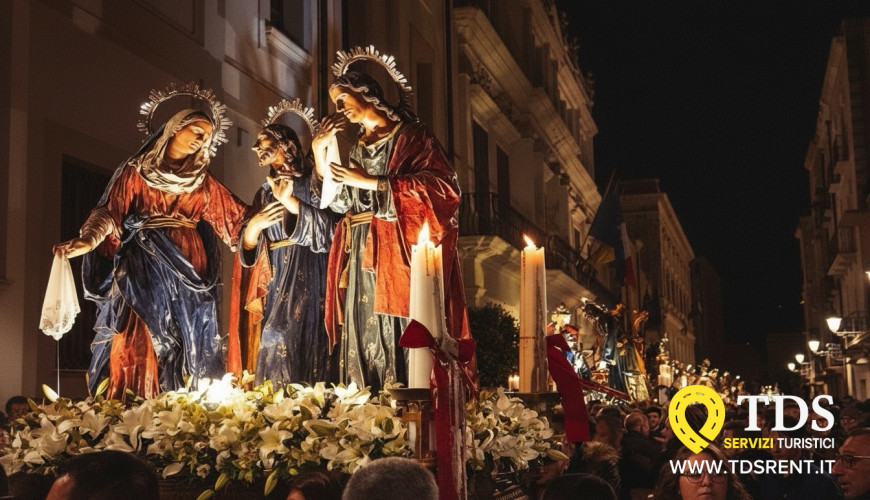
The Holy Week in Trapani is one of the most evocative and ancient religious events in Italy, thanks to the famous Procession of the Mysteries of Trapani. Blending faith, sacred art, and popular tradition, this reenactment attracts thousands of visitors every year from all over Sicily and the world.
Origins and historical development
The Mysteries of Trapani originated between the 16th and 17th centuries as a Lenten rite, influenced by Iberian traditions introduced during the Spanish domination. The aim was to publicly represent episodes of the Passion of Christ, combining religiosity, devotion, and community participation.
From local rite to collective tradition: the birth of the Mysteries
From the early decades of the 17th century, the city guilds (the “maestranze”, meaning professional groups such as artisans, fishermen, and various trades) were called to collaborate: each guild was entrusted with a sculptural group to carry in procession.
The statues, sculptural groups, and their evolution
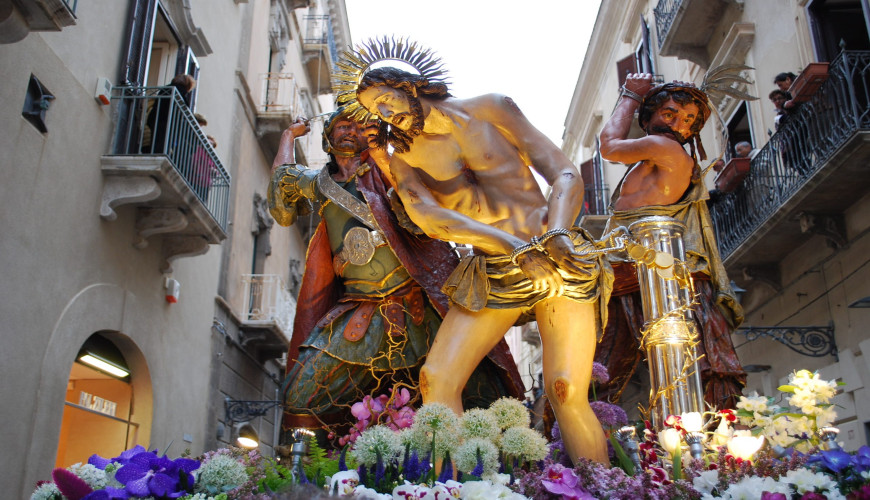
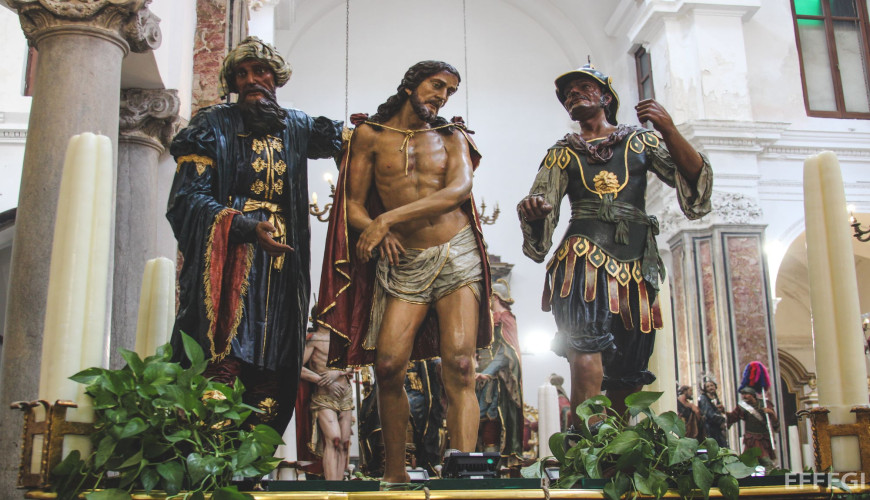
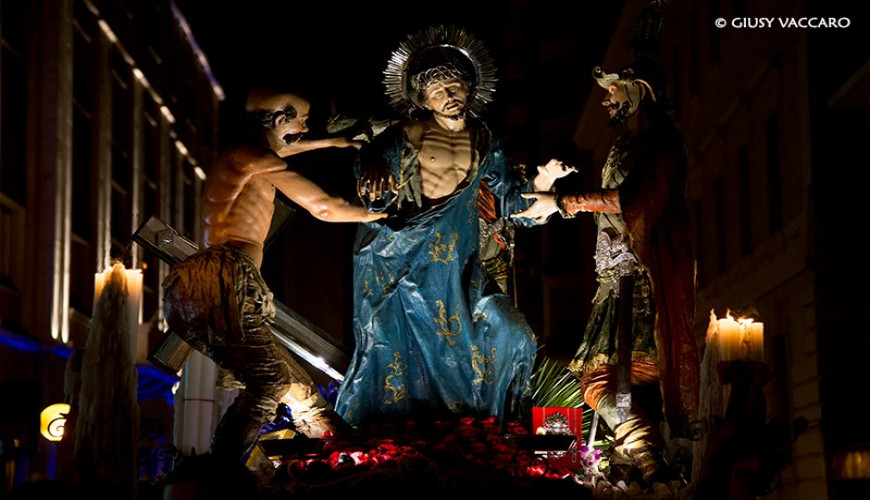
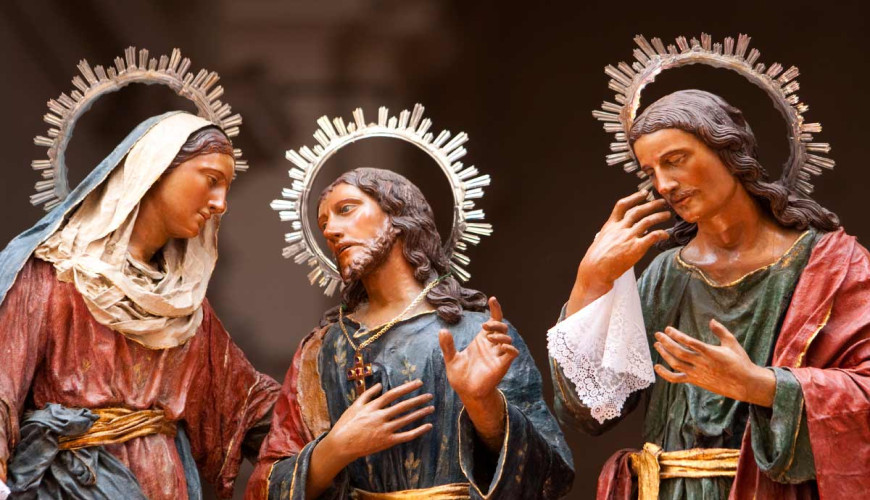
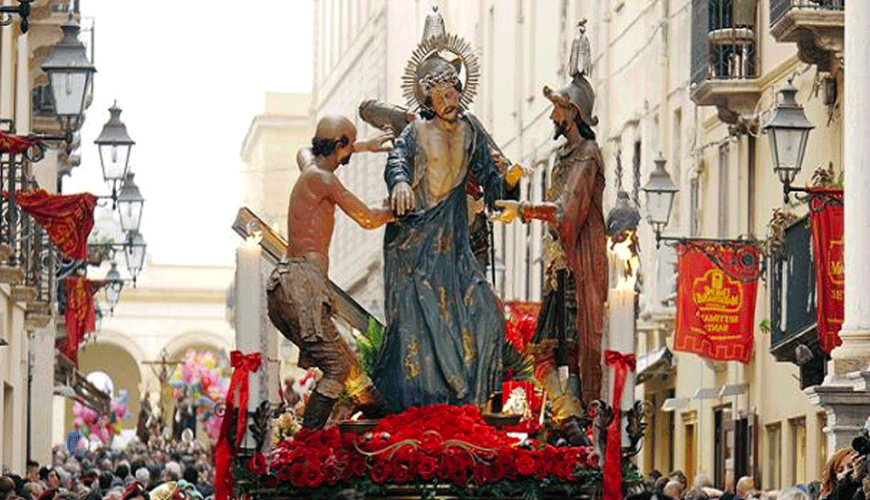
- The Mysteries today consist of 20 sculptural groups (18 groups + 2 simulacra), representing the Passion and Death of Christ.
- The statues are made of wood and papier-mâché, using the traditional techniques of local artisan workshops dating back to the 17th–18th centuries: faces, hands, and feet carved in wood; bodies and garments in canvas shaped with glue, according to the local technique known as “carchèt”.
The procession: a unique experience
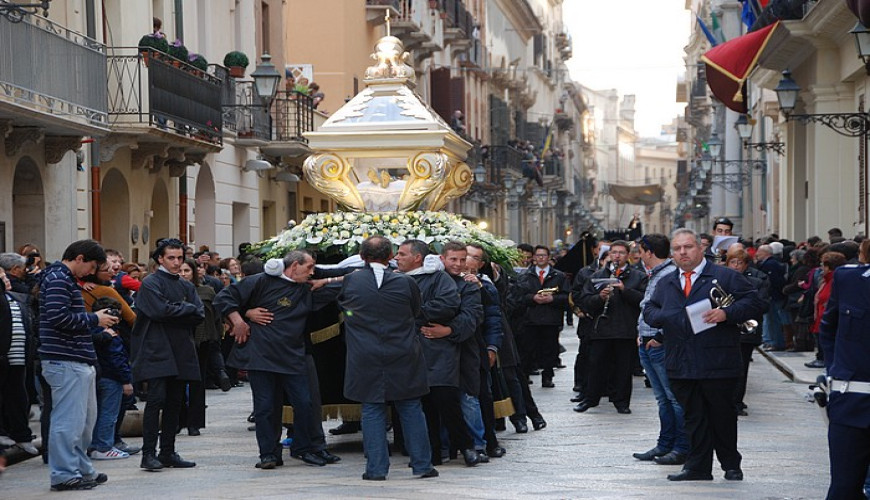
- Every year, on Good Friday, the procession begins around 2:00 p.m. from the Church of the Holy Souls in Purgatory, where the Mysteries are kept throughout the year.
- The sculptural groups, mounted on wooden “vare”, are carried on the shoulders by the “massari” through the streets of the historic center, accompanied by marching bands, funeral chants, and a crowd of faithful and devotees.
- The entire event can last over 20–24 consecutive hours, making it one of the longest processions in Italy and Europe.
- The procession follows a solemn, measured rhythm: the transport of the Mysteries takes place with a movement called “annacata”, a slow swaying motion that enhances the scenic and spiritual effect, especially at night.
Cultural and religious significance
The Mysteries of Trapani are not only a religious event: they represent a deep bond between the city, the confraternities, the artisan guilds, and the community. Each sculptural group preserves history, devotion, and art, offering a living testimony of Sicilian tradition.
- The procession represents the key moments of the Passion, Death, and Burial of Christ, offering participants an intense experience of reflection, piety, and meditation.
- The guilds, families, confraternities, and the Trapanese community act as custodians of a centuries-old tradition that unites sacred and secular life, identity, work, and local history.
- The procession also has a strong cultural and artistic value: the statues, garments, “vare”, music, and the entire performance represent a tangible and intangible heritage of great value, telling the story of Trapani and its people. Taking part in or watching the procession means immersing oneself in centuries of history, discovering sacred art, traditional garments, music, and devotional practices of Trapani.
The 10 things TDS recommends seeing in Trapani during the period of the Mysteries
Visiting Trapani during Holy Week means experiencing one of the oldest and most evocative religious traditions in Sicily. Here is what TDS recommends not to miss.
1. The Procession of the Mysteries of Trapani
The most important event: the sculptural groups of the Passion of Christ parade through the historic center for over 24 hours.
2. Church of the Holy Souls in Purgatory
The symbolic place of the Mysteries, the starting and ending point of the procession.
3. The historic center during the procession
The streets and squares of Trapani become the stage for a rite filled with emotion and spirituality.
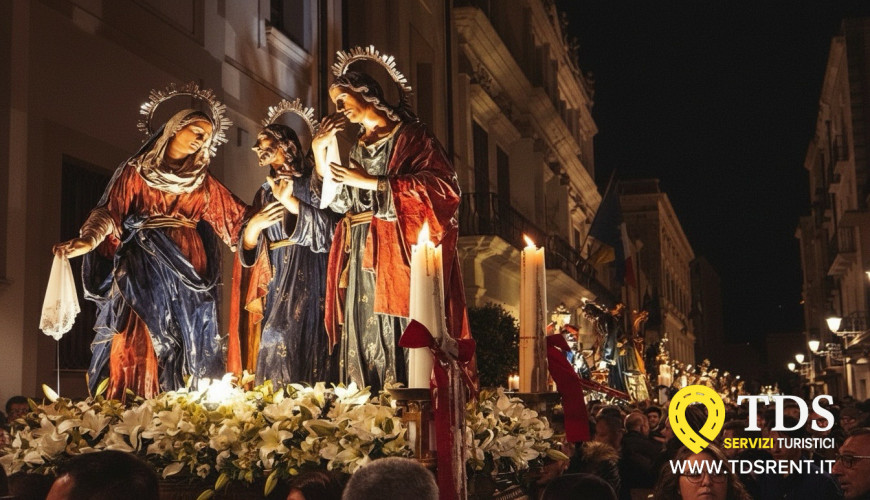
4. The Mysteries at night
Nighttime offers the most intense atmosphere, with soft lights, drums, and the traditional “annacata”.
5. Squares and iconic views of Trapani
Perfect places to watch the procession and breathe in the city’s atmosphere.
Walking through alleys and markets
6. Torre di Ligny
An ancient tower overlooking the sea, now a museum and panoramic viewpoint.
7. Dante Alighieri Seafront
Perfect for a sunset stroll.
8. Triton Fountain
One of the symbols of the city.
9. Cathedral of San Lorenzo
An important example of Trapanese Baroque, to be visited during Holy Week.
10. Agostino Pepoli Regional Museum
Ideal for learning more about the history and art of the area.
To discover the most authentic Trapani, between popular traditions and daily life.
Here are the 10 things recommended by TDS to eat in Trapani, to discover the most authentic flavors of Trapanese cuisine:
Fish couscous
The symbolic dish of Trapani, of Arab origin, prepared with hand-worked semolina and fish broth.
Busiate with Trapanese pesto
Typical pasta dressed with tomato, almonds, garlic, basil, and extra virgin olive oil.
Bluefin tuna
A protagonist of maritime tradition: grilled, seared, or sweet-and-sour.
Fried fish
Calamari, shrimp, and the freshest small fish, crispy and flavorful.
Pane cunzato
Rustic bread seasoned with oil, tomato, anchovies, local cheeses, and oregano.
Tuna bottarga
An intense and savory specialty, often served in slices or grated over pasta.
Eggplant caponata
A perfect balance of sweet and sour, one of the most representative side dishes of Sicilian cuisine.
Typical local cheeses
Sicilian pecorino, tuma, and primosale, often paired with honey or jams.
Sicilian cannoli
Crispy shells filled to order with fresh ricotta, one of the most beloved desserts.
Sicilian granita with brioche
Ideal at any time of day, especially on warmer days.
According to TDS, tasting these dishes means experiencing Trapani through its gastronomic tradition, shaped by the sea, history, and Mediterranean flavors.
How to experience the Mysteries with TDS Transfer
Here is what TDS recommends doing to best experience the Mysteries of Trapani, a unique experience of faith, tradition, and identity:
Arrive in the city early
Holy Week attracts thousands of visitors: TDS recommends organizing transfers or car rental in advance to move around stress-free.
Attend the beginning of the procession
The moment when the groups leave the Church of Purgatory on Good Friday is one of the most moving.
Experience the procession at night as well
Nighttime hours offer an intense and evocative atmosphere, with soft lights, silence, and the slow rhythm of the “annacata”.
Follow the route in stages
You don’t need to stay in one place the whole time: alternate moments of observation with walks through the historic center.
Respect the religious nature of the event
The Mysteries are first and foremost a rite of faith: TDS recommends a discreet and respectful attitude.
Combine culture and tradition
During breaks, visit churches, museums, and the historic center to better understand the historical context of the event.
Taste local cuisine
Between one phase of the procession and another, enjoy a gastronomic break with typical Trapanese dishes.
Choose strategic panoramic spots
Some viewpoints in the historic center allow you to watch the groups more calmly.
Stay until the return on Holy Saturday
The final return of the Mysteries is one of the most intense and symbolic moments.
Rely on TDS for logistics
With TDS Transfer (NCC) or TDS Rent, you can move around comfortably, avoiding traffic and parking difficulties.
According to TDS, experiencing the Mysteries of Trapani means taking the right time, observing with respect, and letting yourself be involved in a centuries-old tradition.
Thanks to TDS Transfer, reaching Trapani is simple, comfortable, and safe:
- Direct transfers from airports, ports, and hotels to the city center.
- Modern, comfortable vehicles, ideal for groups or families.
- Punctual and flexible service, without parking or traffic stress.
- Dedicated assistance for bookings and information.
Experiencing the Mysteries of Trapani with TDS Transfer means enjoying Holy Week in Sicily in total peace of mind, immersing yourself in history, spirituality, and local traditions for an unforgettable experience.
If you want to rent a car at Palermo, Catania, Trapani-Birgi airport, or anywhere else in Sicily where you are, click this link https://www.tdsrent.it
If you want to book a transfer from one of the main airports or from anywhere in Sicily where you are, click here https://www.tdstransfer.it